

What if I told you that sharing your messy, imperfect journey could actually grow your business faster than any polished marketing campaign?
Sounds crazy, right?
Yet, Pieter Levels built a flight simulator game using AI and hit $75K MRR in months by sharing every step on X, turning his raw process into a massive audience and a thriving business.
The old playbook of hiding struggles and only showing wins is dead. Building in public has become a powerful strategy for authentic connection that’s helping B2B founders turn their raw journeys into massive audiences, strong communities, and thriving businesses.
So why isn’t everyone building in public?
The truth is, sharing your struggles feels risky. Most founders are locked in a cycle of perfectionism, only willing to share when everything is flawless.
But here’s the kicker: audiences connect with authenticity, not perfection.
By showing your real journey, struggles, wins, and all, you build trust, foster loyalty, and create a community invested in your success.
In this playbook, I’ll show you how to ditch the fear, embrace strategic transparency, and use building in public to supercharge your B2B brand.
Ready to stop overthinking and start building in public? Let’s dive in.
Why Build in Public?
Building in public is the practice of sharing your product or business journey as it unfolds.
This approach was pioneered in the early 2010s by companies like Product Hunt and Buffer, and has since flourished as a powerful way for professionals, creators, and founders to cut through the noise with authenticity.
Here’s why it’s a game-changer for B2B brands:
Builds a powerful personal brand: A strong personal brand amplifies your business, as seen with Brett Adcock, founder of Figure AI. In 2024, Adcock shared weekly X threads detailing Figure’s humanoid robot development, from prototype challenges to raising $675M in funding. His transparency built a 100K+ following, attracted top AI talent, and secured partnerships with OpenAI and Microsoft. Building in public grows your brand by showcasing your values, expertise, and journey, making you a magnet for opportunities.
Drives authenticity in an AI world: In an era where AI-generated content is everywhere, genuine human experiences stand out. Building in public showcases the authentic journey that algorithms can’t replicate, creating stronger connections with your audience.
Creates a market before your product: By sharing your journey, you attract an audience of potential customers before your product is even ready. This builds a ready audience, eager to engage with your offering from day one.
Keeps you accountable: Public commitments drive action. As Seth Godin notes, “Saturday Night Live goes on at 11:30 because it’s 11:30, not because it’s ready.”
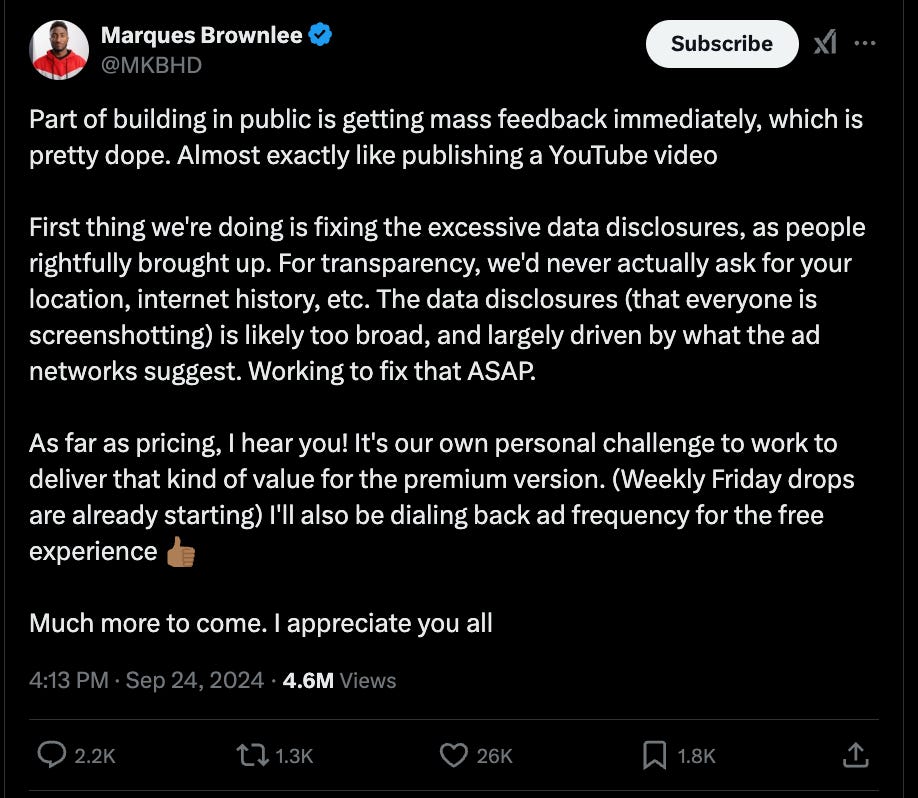
Improves your product through feedback: Public sharing invites input from your audience, helping you spot flaws and refine your product early on. This collaboration ensures your product meets real market needs.
Here’s how building in public helped Marques Brownlee refine his product:
Overcoming the Fear: A Mindset Shift for Building in Public
Sharing your struggles as a B2B founder feels risky.
What if competitors exploit your weaknesses? What if your audience loses confidence? These fears are valid but manageable with the right mindset shift. This means moving from perfectionism to transparency and embracing vulnerability as a strength.
Here’s how to make the shift:
Adopt a teaching mindset: Building in public is about sharing knowledge, not just progress. Turn every challenge or decision into a lesson, showing your audience how you solve problems. This positions you as a trusted guide, strengthening your authority and building deeper connections.
Let go of perfectionism: Iteration beats perfection. Share prototypes or ideas early, refining based on feedback. At My Content Pal, we’ve seen founders struggle with overthinking posts. Our new Skool community, free to join, offers a safe space to do just that! Share what you’re building, get feedback and advice, and iterate!
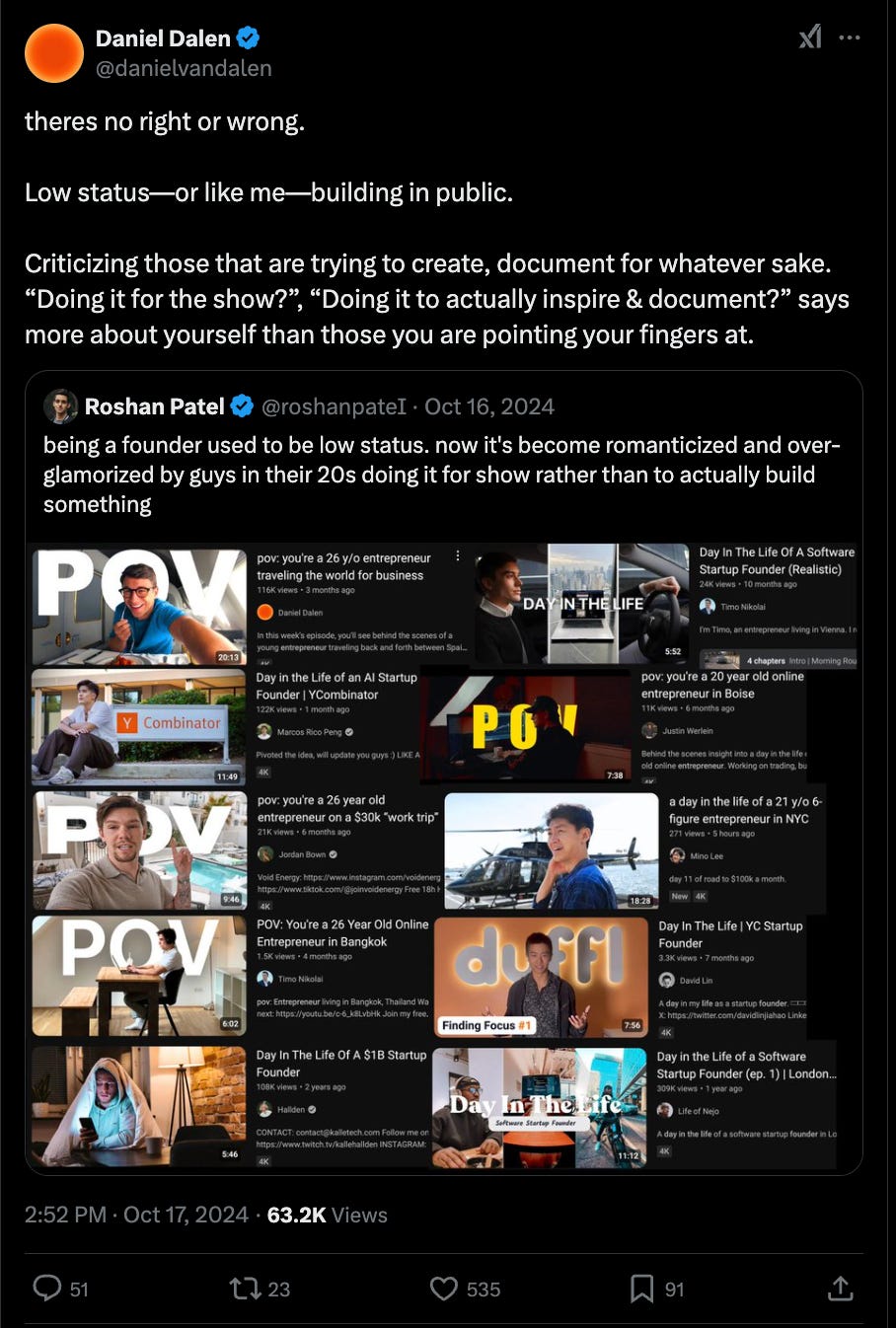
Develop resilience to criticism: Focus on your supporters’ encouragement, not critics’ noise. Use negative feedback to refine your approach, but stay confident in your vision. Criticism often signals you’re gaining traction, not failing, so keep pushing forward.
As Daniel Dalen put it:
Even someone like Sahil Bloom gets hate. He comes across as one of the friendliest guys on the web, and yet somehow people still get their backs up.
Listen to the next 5 minutes of this podcast: How Sahil Bloom Built an Agency by Going Viral. Sahil talks about an incident where he posted a thread that went viral for the wrong reasons and how he views “the downsides that present themselves”.

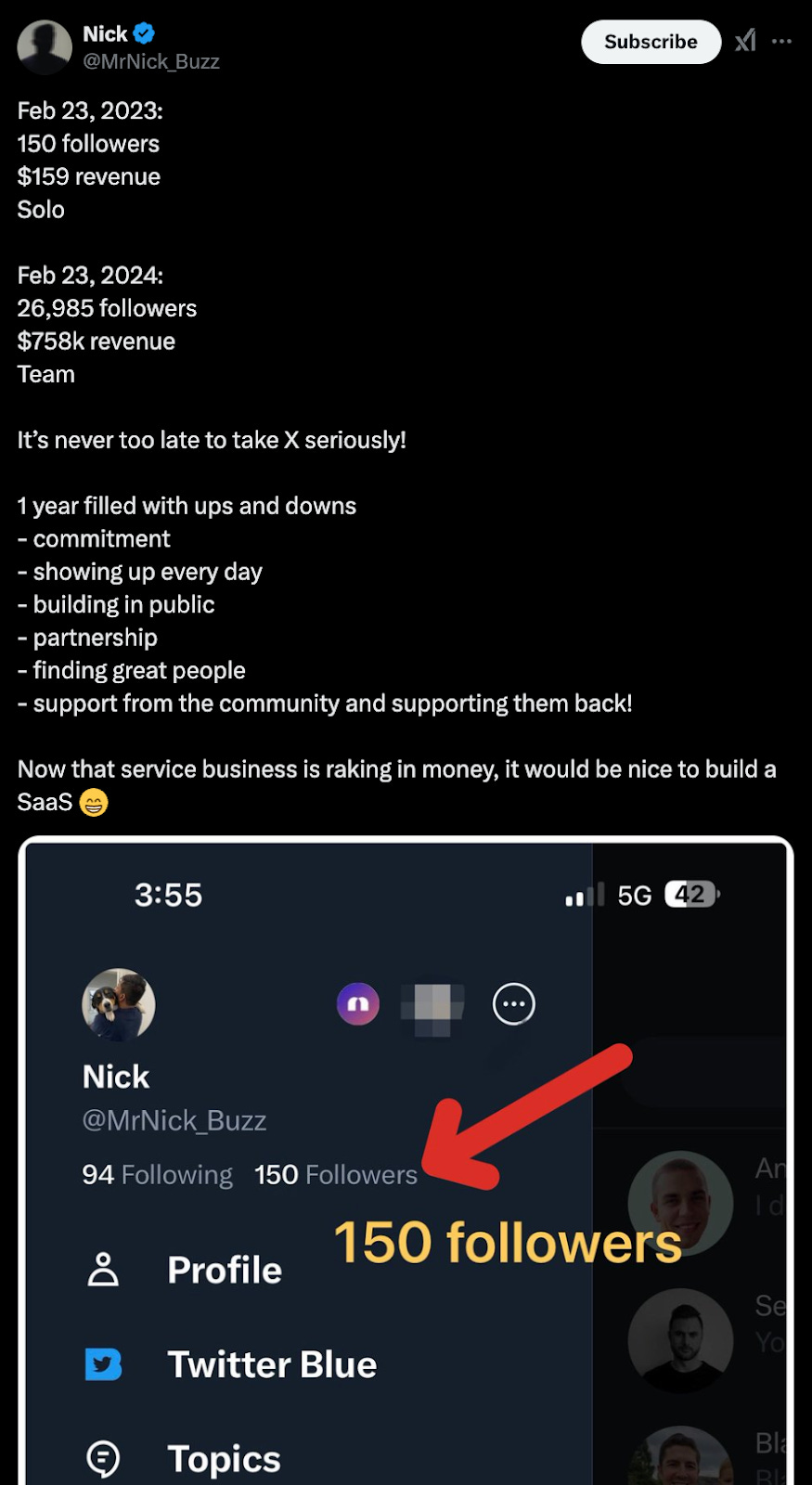
Here’s a success story to inspire you to make this mindset shift:
How to Build in Public: A Strategic Framework
Building in public is about taking your audience on a journey, sharing the highs, lows, and lessons in a way that resonates. Let’s break down how to do it, with examples and a framework to ensure your posts are strategic, not reckless.
Here are a couple of examples of how this looks in practice.
Bhanu Teja P.’s RAGaaS Launch
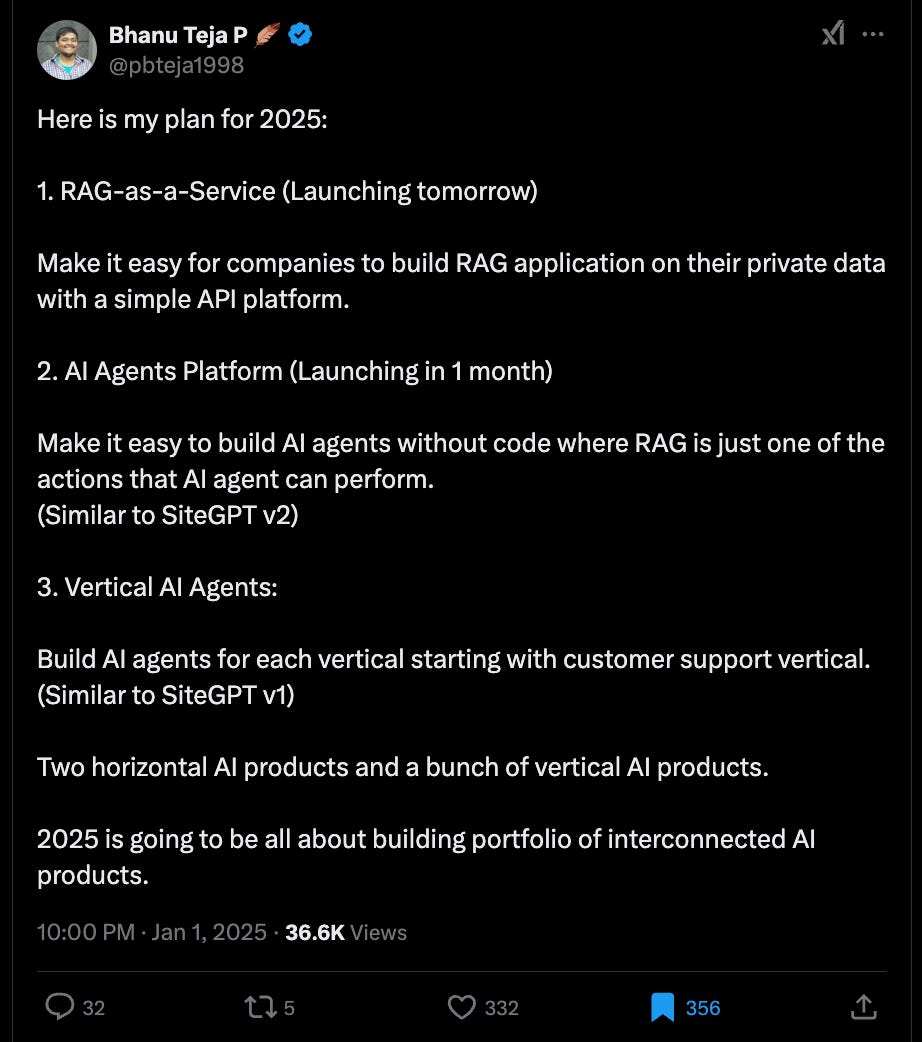
In January 2025, Bhanu Teja P. launched RAGaaS, a privacy-first RAG-as-a-Service platform, and gained thousands of views on X through a transparent build-in-public strategy:
1. Bhanu announced his plan for 2025:
Source: X
2. A few days later, he launched RAGaaS:
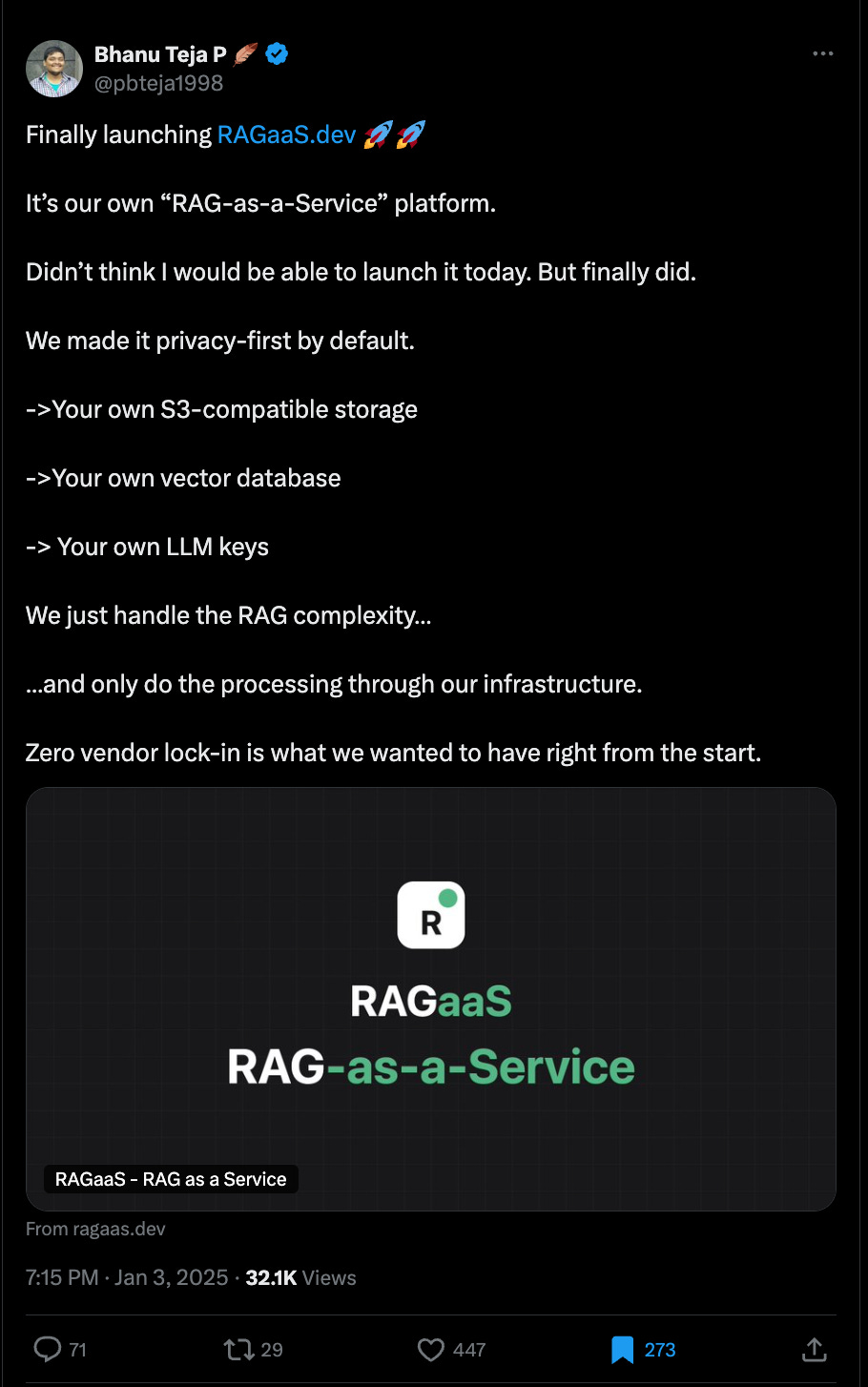
Source: X
3. Then, he did a post-launch update.
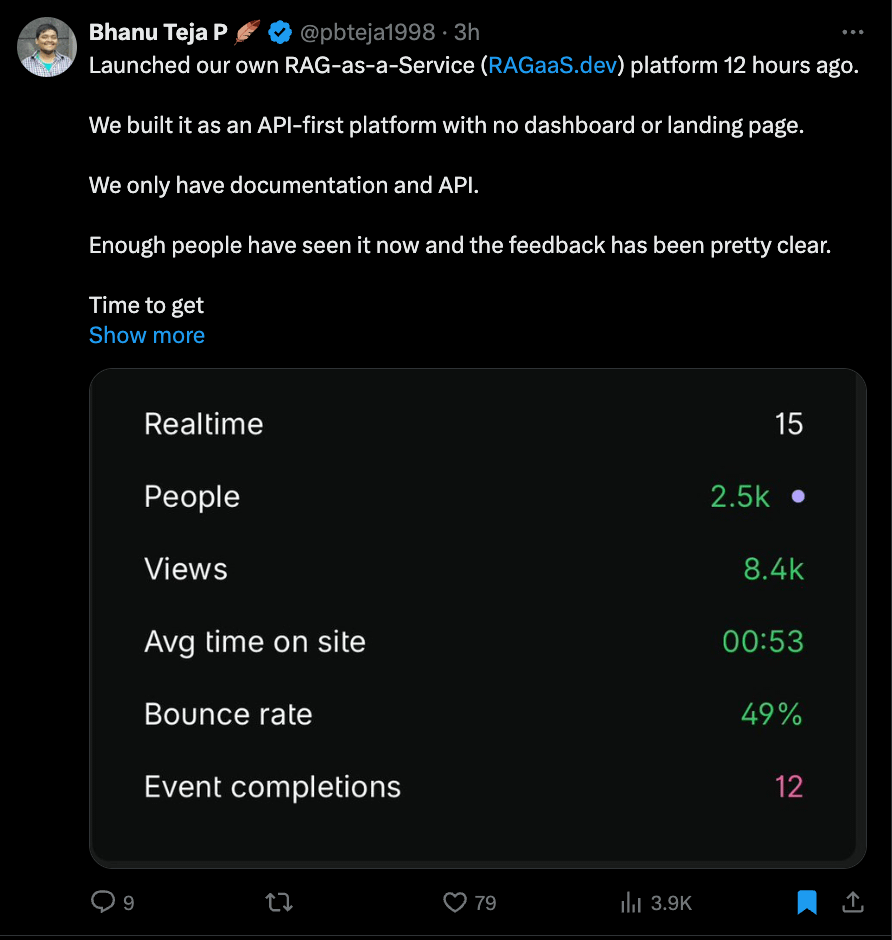
Source: X
4. Then, he talked about product updates.
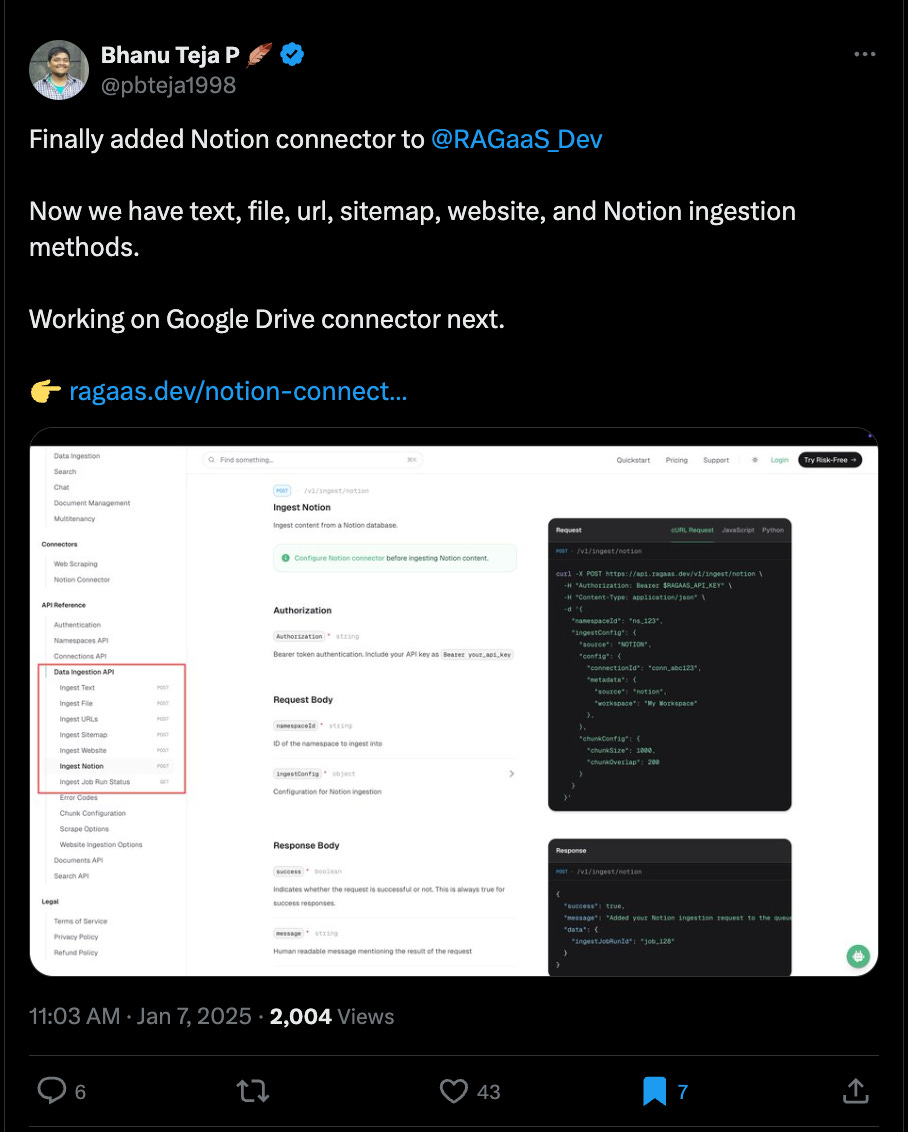
Bhanu has taken his audience on a journey.
Building trust, building fans, and gathering thousands of views with a few quick tweets.
Marin Istvanic’s Ad Agency Growth
Here’s another example of how Marin Istvanic used the build in public approach to turn his struggling agency around and hit $150K a month, all while gaining a huge following on X:
1. In March 2025, Marin shared his agency’s near-crash story:
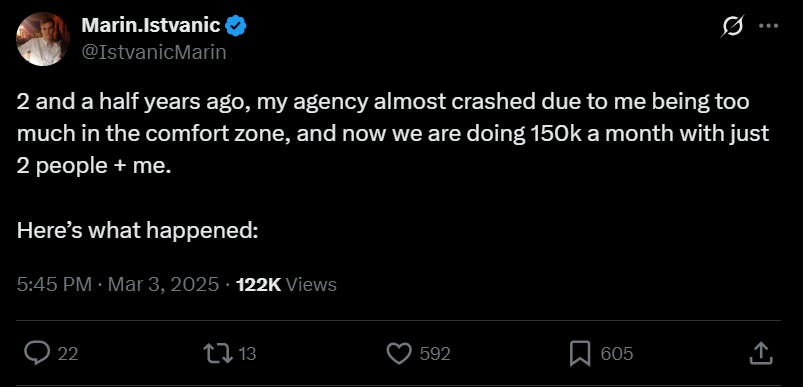
Source: X
2. Before building in public, Marin relied on one client (80% of income), grew their ad spend to $100K daily, but lost them. With only two other clients and failed outreach, he faced a stressful handover and sleepless nights, pushing him to try a new strategy to save his agency.
After joining a program from @wizofecom, he was advised to turn his ad account audits into tweets:
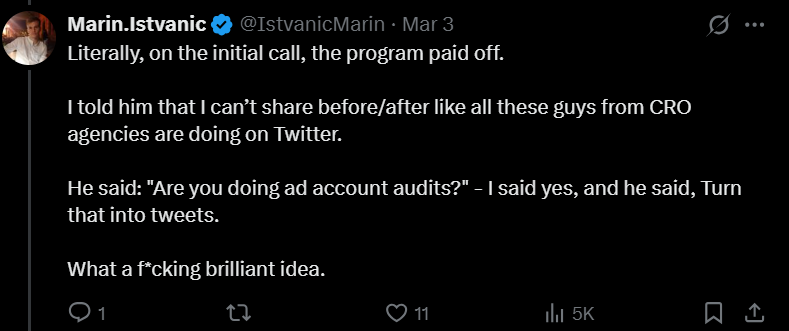
3. So, he started to do this:
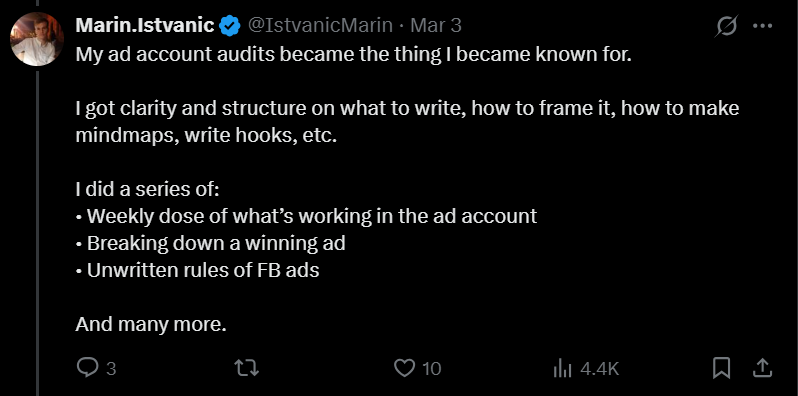
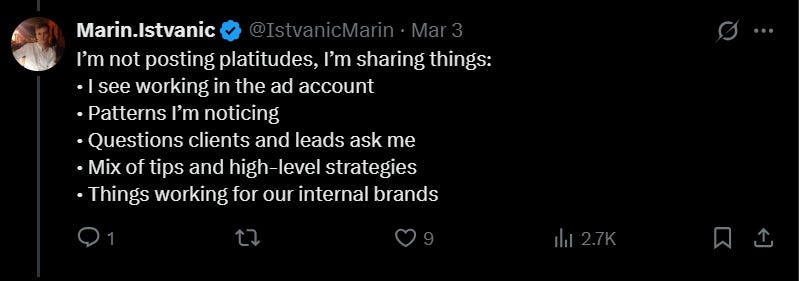
4. In just 3 months, he grew his Twitter following from 400 to 5,000:
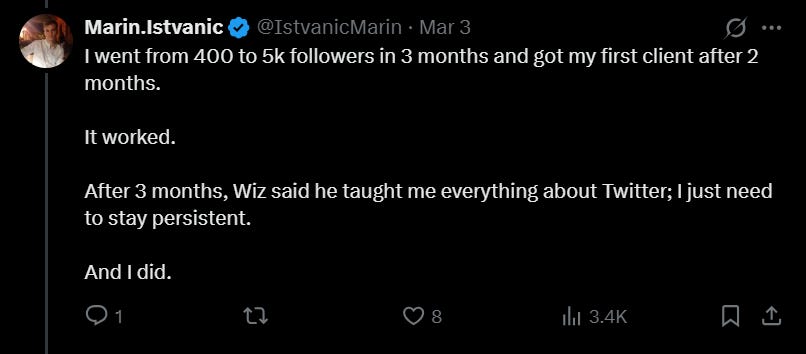
5. By posting two to three times a day, he landed invites to podcasts and speaking gigs, bringing in some top-notch leads:
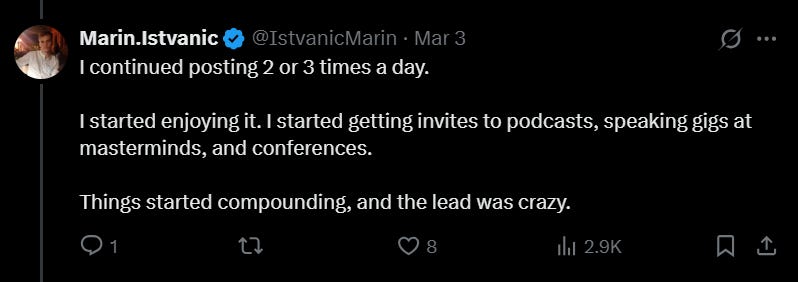
Through transparent tweets, a growing X following, and community trust, Marin turned challenges into opportunities, transforming his agency from near collapse to $150K monthly revenue.
Here’s another entrepreneur who takes massive action and builds in public.
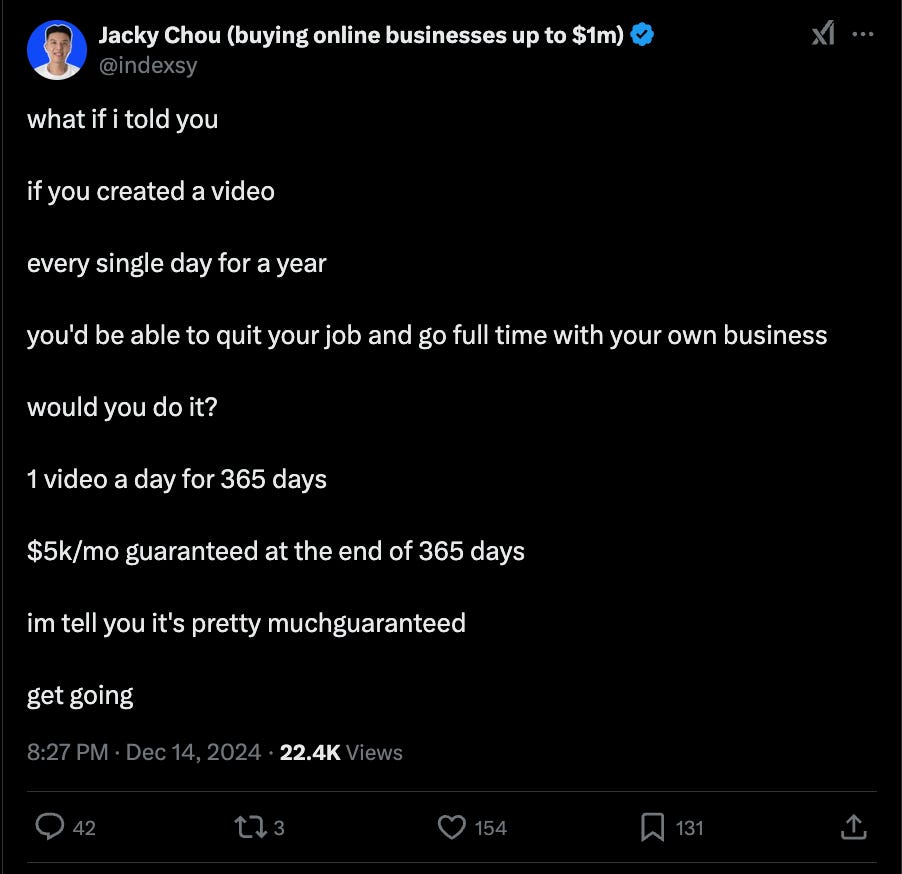
Meet Jacky Chou:
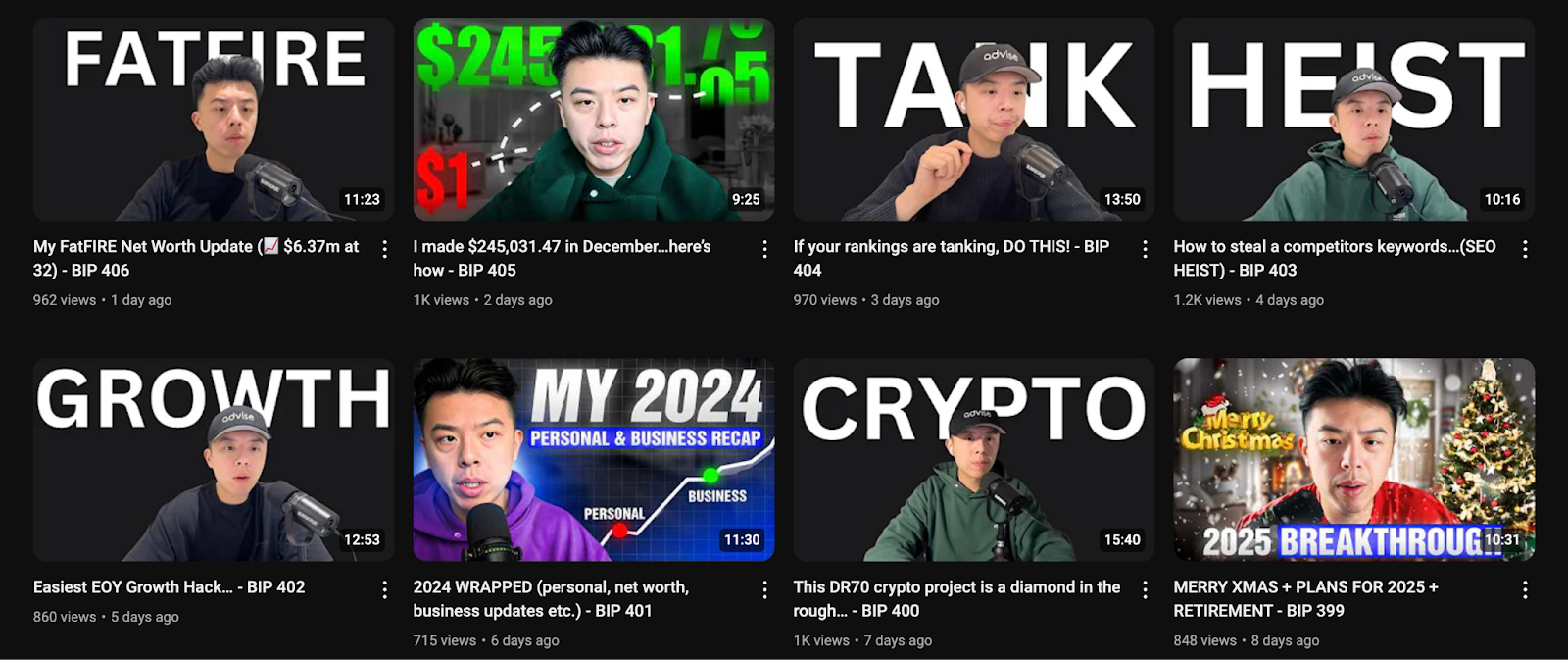
He also regularly shares his business metrics on X. Look at the engagement these transparent posts generate.
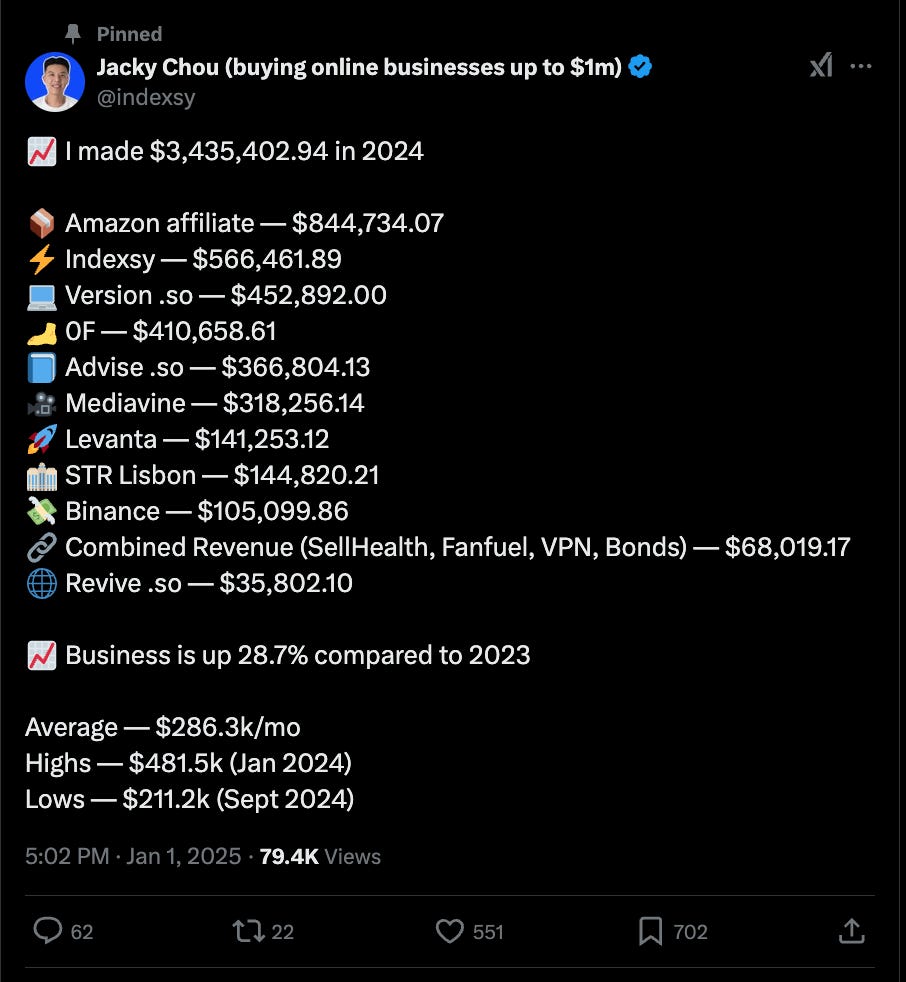
Being open about your numbers builds credibility and attracts an audience interested in your journey.
Here’s another great example from Sam. When Breaking B2B lost $15K MRR in two months, he didn’t ghost his audience. Instead, he shared the brutal truth and his exact comeback strategy:
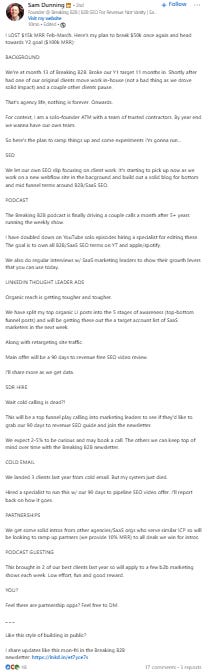
This is building in public at its finest. Sam’s transparency became a trust accelerator during the exact moment most would lose credibility.
Now that you’ve seen real-life examples of the transformative effect building in public can have on a brand, here’s how you start.
The Journey of Building in Public: What to Share When
As Arvid Kahl outlines in the Bootstrapped Founder podcast, every B2B business evolves through stages:
Preparation Stage: Conceptualising and planning.
Survival Stage: Finding a repeatable business model through experimentation.
Stability Stage: Building systems, processes, and optimisation.
Growth Stage: Scaling to serve more customers.
How you build in public will depend on your current stage. Let’s look at what to share at each stage.
Types of Build in Public Posts by Business Stage
Stage
Post Type
Example
Why It Works
Preparation
Public Pledge
“I’m building a SaaS for freelancers, follow my journey starting today!”
Sets the stage, builds anticipation, and commits you publicly.
Product Development Updates
“Day 3: Struggling with the UI for my SaaS, here’s my prototype so far.”
Shows authenticity, invites early feedback to refine your product.
Survival
Pricing/Product Experiments
“Experimenting with a $29/month tier for my course platform. Too high? Too low? Vote below!”
Engages audience for input, aligns product with market needs.
Shoutouts to Early Supporters
“A BIG SHOUTOUT goes to the $DIONE community for helping with the open beta testing for the Odyssey Cross-Chain bridge. We have had nothing but positive feedback.- X”
Builds community, shows gratitude, and encourages more early adopters.
Stability/Growth
Milestones (Big and Small)
“Just hit $10K MRR, here’s how we did it!”
Celebrates progress, builds credibility, and inspires your audience.
Lessons Learned
“Scaling to 1,000 users taught me to automate support. Here’s my process.”
Positions you as a teacher, sharing actionable insights.
Any Stage
Business Decisions
“Chose AWS over Google Cloud for scalability—here’s why.”
Demonstrates expertise, invites discussion, and builds authority.
Stack Sharing
“My tech stack: Notion for planning and Figma for design. What’s yours?”
Sparks engagement, provides value, and fosters community collaboration.
Remember, building in public is storytelling, not stream of consciousness. For narrative purposes, it’s key to give your audience context.
You can create a template that you follow. Having a consistent format helps your audience know what to expect and makes creating content much simpler.
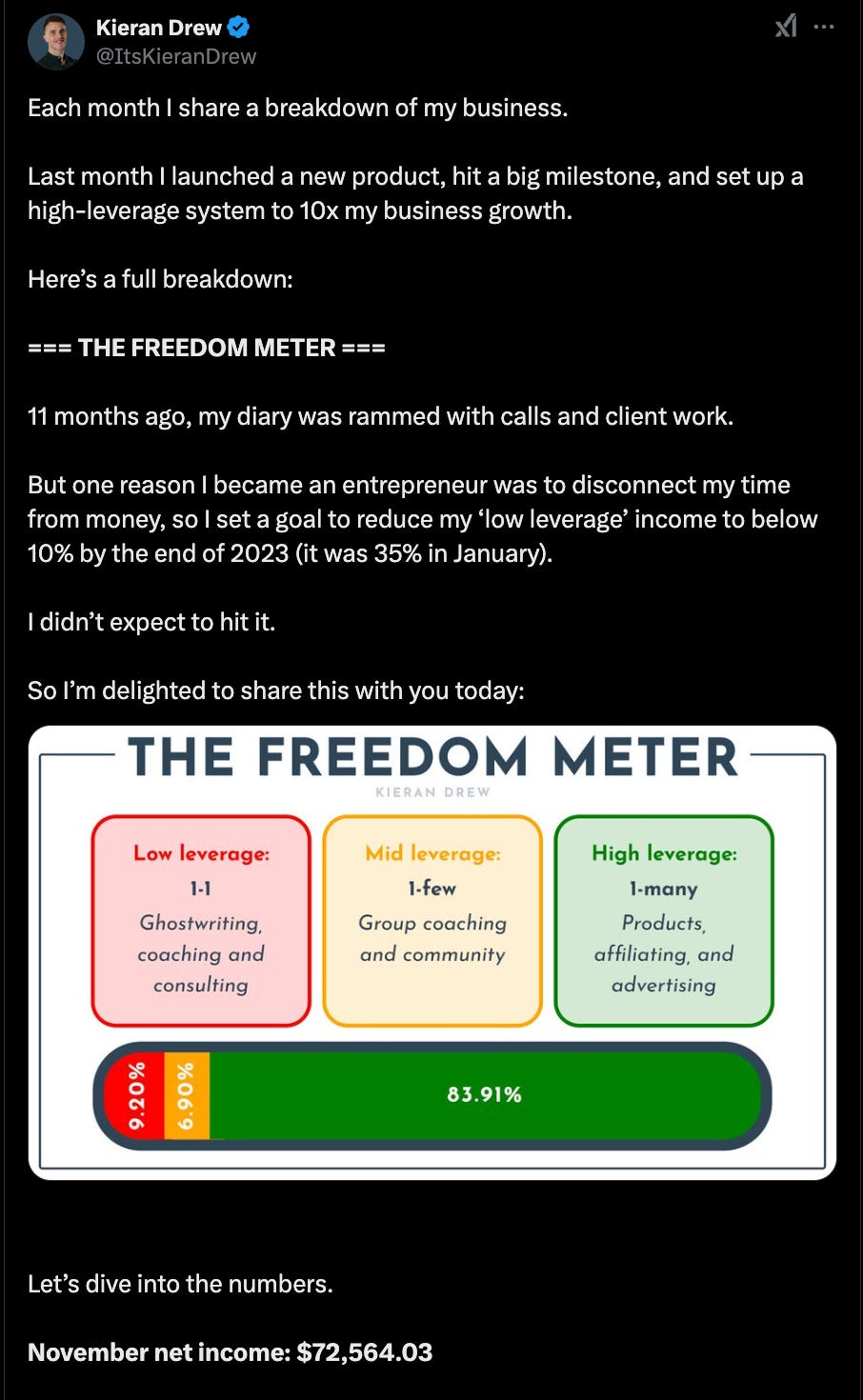
Here’s a great example by Kieran Drew:
Here’s another that’s very ambitious.
Milestone posts work when they combine celebration with a forward-looking strategy. Sam’s 12-month update shows exactly how it’s done:
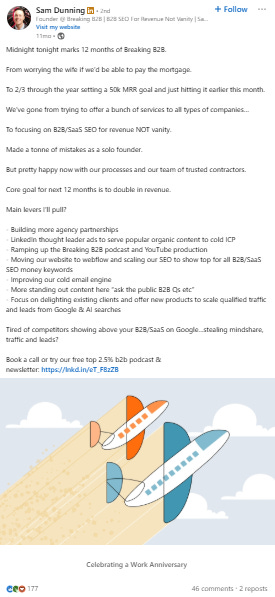
See the balance? Sam acknowledges the milestone (hitting $50K MRR), but the post focuses on what’s next.
Post Templates
Here are some post template ideas to inspire your next X post:
1. Public Pledge Template (Preparation Stage)
Kick off your project with a public commitment to build anticipation and invite followers along.
Template: I’m launching [project/idea] to solve [problem]. Follow my journey as I build it in public! First step: [specific action]. What do you think?
Example: “I’m building a SaaS to simplify invoicing for freelancers. Follow my journey as I code the MVP! First step: designing the UI. Thoughts?”
2. Experiment Results Template (Survival Stage)
Share the outcome of a test or experiment to demonstrate progress and invite your audience to weigh in on next steps.
Template: Tested [experiment] for [project]. Results: [key findings]. Here’s what we’re doing next: [next action]. What would you try based on this?
Example: Tested a freemium model for our SaaS. Results: 20% more sign-ups, but lower conversions to paid. Next, we’re tweaking the free tier limits. What’s your take on freemium?
3. Team or Collaboration Highlight Template (Stability/Growth Stage)
Shine a light on your team or partners to build trust and show the people behind your project. This brings a human touch to your build-in-public journey and gives credit where it’s due.
Template: Meet [team member/partner] who’s helping [project] by [their role/contribution]. Today, we’re [current task]. Got any advice for [related topic]?
Example: Meet Sarah, our UX designer for our CRM SaaS, making our dashboard user-friendly. Today, we’re testing new layouts. Got advice for creating an intuitive UX?
4. Milestone Celebration Template (Stability/Growth Stage)
Celebrate achievements, share your strategy, and set future goals while thanking your supporters to build credibility.
Template: Just hit [milestone] with [project]! Here’s how we got here: [key actions]. Next up: [next goal]. Thanks to [supporters/community] for the support!
Example: “Just hit $10K MRR with our CRM tool! We got here by streamlining features based on user feedback. Next up: scaling to 1,000 users. Thanks to our beta testers!
5. Customer Feedback Spotlight Template (Any Stage)
Use feedback from your audience or users to show you’re paying attention, making changes, and open to even more ideas. Keep it conversational and provide clear examples of what the feedback led to.
Template: Got great feedback on [project/feature] from [audience/customer]: “[quote or summary].” Here’s how we’re using it: [action taken]. What else should we improve?
Example: Got great feedback on our SaaS from a beta user: “Love the analytics, but need simpler reports.” We’re adding a one-click report export. What else would make reporting easier?
6. Lesson From Failure Template (Any Stage)
Talk about what didn’t work out, and how you’re using that to move forward. This shows growth, builds trust, and provides value to your audience.
Template: Tried [action/strategy] for [project], but it didn’t work: [what happened]. Learned [lesson]. Now, we’re [new approach]. What’s a failure that taught you something?
Example: Tried cold emailing for our SaaS leads, but got low responses. Learned we needed more personalized outreach. Now, we’re testing targeted LinkedIn DMs. What’s a failure that helped you grow?
7. Question to Community Template (Any Stage)
Pose an open-ended question to your audience to engage them in a conversation and gather insights. This also shows that you value their input.
Template: Working on [project/task] and need your input: [specific question]? Here’s where we’re at: [brief context]. Share your thoughts!
Example: Working on pricing for our B2B SaaS and need your input: what’s the biggest factor when you choose a subscription plan? We’re debating tiered vs. flat pricing. Share your thoughts!
8. Tool or Resource Recommendation Template (Any Stage)
Share a tool or resource that has been valuable to your project. Explain how it’s helping and encourage your audience to share their recommendations.
Template: Found [tool/resource] super helpful for [task] on [project]. Here’s why it works for us: [brief explanation]. What tools do you use for [related task]?
Example: Found Trello super helpful for managing our SaaS dev sprints. Its boards keep our team aligned. What tools do you use for project management?
9. Monthly Transparency Template (Stability/Growth Stage)
Share a balanced view of your month with honest wins and losses. This builds credibility and shows you’re transparent about the ups and downs of building in public.
Template: Month [N] at [project]. Here’s the Good, Bad, and Ugly.
UGLY: [1-2 real issues]. BAD: [what didn’t work or missed targets]. GOOD: [wins and milestones]. Next month: [3-4 experiments or priorities].
Example: “Month 11 at my agency: $52.7K MRR. Here’s the Good, Bad, and Ugly. UGLY: 1 client churned (lesson: set regular calls with hard deadlines). BAD: I’m still solo (lesson: talk to agency friends about hiring). GOOD: We broke our $50K MRR goal and locked in renewals for 2025. Next month: hiring and ops overhaul.
10. Comeback Plan Template (Survival/Stability Stage)
Turn a setback into a strategic post by sharing what went wrong and your plan to recover. This shows resilience and invites your audience into your problem-solving process.
Template: Lost [X metric] in [timeframe]. Here’s the plan to bounce back. What happened: [brief context]. The plan: [3-5 specific actions with timeline]. What would you try in my shoes?
Example: “Lost $15K MRR in Feb-March. Here’s the plan to hit $50K again and push toward $100K MRR. What happened: one client moved in-house, others paused, but that’s agency life. The plan: SEO revamp, podcast push, LinkedIn ads tests, SDR hire, cold email refresh, and partnership outreach. What would you try in my shoes?”
11. Quick Win Experiment Template (Survival/Any Stage)
Highlight a specific test or tactic that delivered results. Keep it punchy and actionable so your audience can learn from what worked.
Template: Tried [experiment] after [context/problem]. Results: [key outcomes with numbers]. Here’s the breakdown: [2-3 tactics that worked]. Questions? Drop them below.
Example: “Tried two strategies after a tough February and added $13.5K MRR in March. Results: 2 new deals from refreshing our SEO money pages and 1 deal from podcast guesting via ListenNotes prospecting. Questions? Drop them below.”
12. Anniversary Milestone Template (Stability/Growth Stage)
Mark a significant time milestone (6 months, 1 year, etc.) by reflecting on the journey, sharing key moves, and setting your next goal.
Template: [Timeframe] of [project] today. Started from [starting point] and hit [achievement]. How we got here: [3-4 key strategies]. Next [timeframe] goal: [ambitious target]. [Soft thank-you + CTA, e.g., Thanks for following along / Book a call / Join the journey]
Example: “Today marks 12 months of my agency. From worrying about the mortgage to hitting our $50K MRR goal early. How we got here: focused on B2B/SaaS SEO for revenue not vanity, made mistakes, learned fast, built solid processes. Next 12 months: double revenue via partnerships, ads, and content. Thanks for following along!”
13. Launch Behind-the-Scenes Template (Growth Stage)
Take your audience inside a new launch or offer. Show your strategy, the tactics you’re testing, and what you’re betting on.
Template: Launching [new thing] for [target audience]. Why now: [context or gap you’re filling]. The plan: [2-3 specific tactics or channels]. The offer: [value prop with proof]. Check it out: [soft CTA].
Example: “Launching LinkedIn Thought Leader and Google Ads for B2B SaaS with a 90-day pipeline offer. Why now: growth so far came from organic, podcast, and SEO, so it’s time to amplify. The plan: amplify top content via LinkedIn ads + high-intent Google search terms The offer: “90 Days to Pipeline” video review landing page packed with social proof + guarantee. Check it out if you’re curious.”
14. Content Playbook Template (Any Stage)
Package up your best content tactics or creative plays into a digestible list. This positions you as resourceful and gives your audience ideas they can steal.
Template: [Number] content plays that [result you achieved]. Here’s the list: [brief title and context for each, with emojis or numbers]. What’s working for you right now?
Example: “Here are 6 content plays I used to get remembered on a shoestring budget: 1️⃣ Ask-the-public style B2B marketing & SEO questions. 2️⃣ ‘Son asks dad’ B2B questions. 3️⃣ Reworked classic memes. 4️⃣ SEO video skits. 5️⃣ Mad experiments. 6️⃣ Everyday drivers: newsletter, podcast, SEO blog. What’s working for you right now?”
15. Event or Field Day Recap Template (Growth Stage)
Turn a single event into a momentum post. Show the scope, the results, and why it mattered beyond just metrics.
Template: How we turned [one event/day] into [X views/assets/leads]. Here’s what we did: [timeline or agenda]. The results: [metrics and intangibles like mindshare]. Why it worked: [strategic reason]. Worth it? [reflection].
Example: “How I got 60K+ views and 20 pieces of content from ONE day in London. Here’s what we did: street interviews, sandwich-board stunt, shoot with Tom Hunt, and founder collabs. The results: 60K+ views, 2 founder interactions, and prospects mentioning it on sales calls. Why it worked: it’s fun, memorable, and gets Breaking B2B talked about. Worth it? Absolutely (plus beers).”
Our new Skool community features examples of all these build in public post types, plus templates you can use for your own building-in-public journey!
Principles of Effective Build in Public Posts
Building in public thrives on posts that connect, inspire, and invite collaboration. These core principles ensure your updates stand out in a crowded digital space, turning followers into an engaged community.
Consistency: Share updates often (once a week is a good start) to keep your audience engaged and show you’re reliable. A steady schedule builds confidence in your leadership, reassuring clients and partners you’re committed. Planning posts ahead with scheduling tools prevents missed days, so your progress stays on track and your momentum keeps growing.
Storytelling: Share the full story of your journey, including challenges, choices, and lessons learned, not just the wins. Honest posts about how you tackle problems feel real and relatable, showing clients and partners you’re a problem-solver they can trust. This openness makes your content engaging and builds stronger connections.
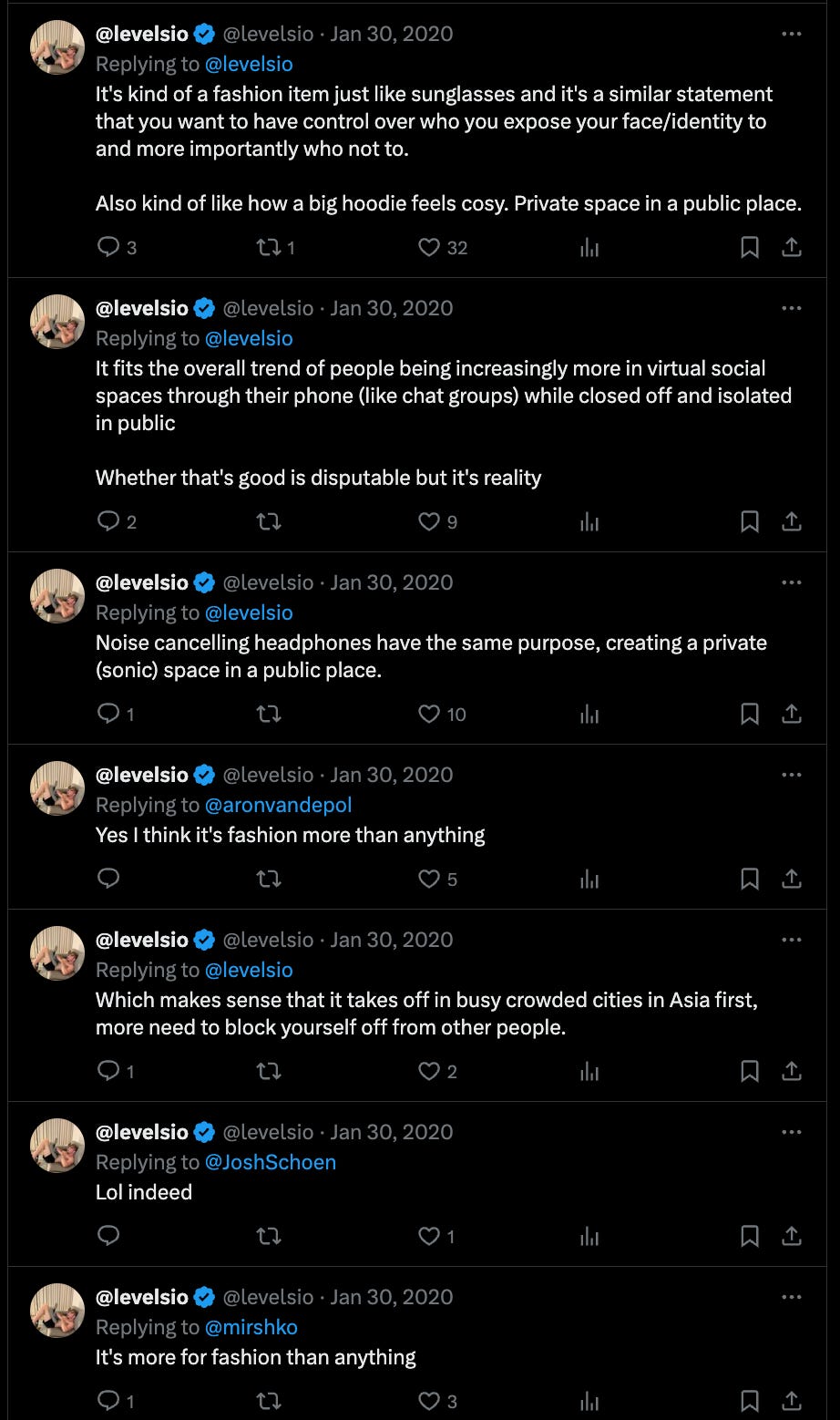
Engagement: Build a community by replying to comments and hosting AMAs (Ask Me Anything). Listening and responding turns followers into supporters who cheer for your goals and share your vision.
If you look back at levelsio’s comment history, you’ll see he constantly engages back. He never posts and ghosts.
AMA posts can be as simple as:
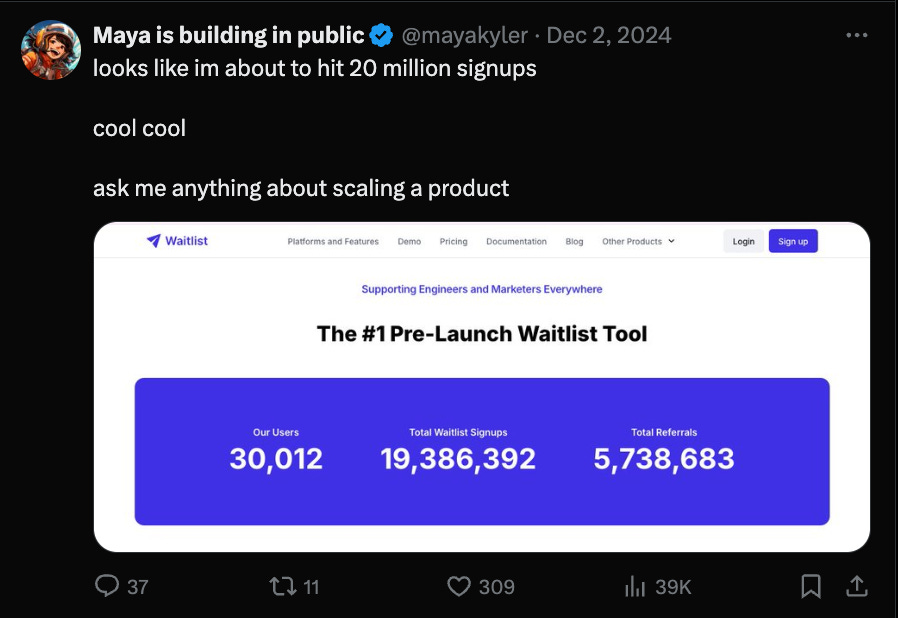
These principles ensure your posts resonate, but optics matter. Let’s explore how to share safely.
Optics and Perception: What to Share (and What to Avoid)
Being vulnerable doesn’t mean sharing everything. It means sharing strategically.
The Strategic Vulnerability Checklist
Before posting, run your content through this checklist:
Tone Check: Does this come across as authentic rather than complaining?
Perception Risk: Could a screenshot of this be taken out of context?
Competitor Advantage: Would this information give competitors an unfair advantage?
Customer Confidence: Will this maintain or enhance customer trust?
Lesson Focus: Does this emphasise the lesson rather than just the problem?
Strategic Value: Does sharing this provide value to my audience?
Future Impact: Will I be comfortable with this being public in 1, 5, or 10 years?
Examples of Effective vs. Problematic Sharing
Avoid Sharing
Better Alternative
“We lost our biggest client today.”
“Losing a major client taught us to diversify our client base. Here’s our new strategy...”
“Our cash flow is terrible this month.”
“We’re implementing new financial forecasting after facing a cash flow challenge. Here’s what we’re learning...”
“My co-founder and I disagree on everything.”
“Here’s how we’ve structured our decision-making process to leverage our different perspectives...”
“Our churn rate is skyrocketing.”
“We identified a pattern in our customer feedback that’s helping us address retention. Here’s our approach...”
“My competitors suck.”
“Here’s how we’re solving X differently.”
“I’m building something new.”
“I’m launching a SaaS for freelancers, follow for updates!”
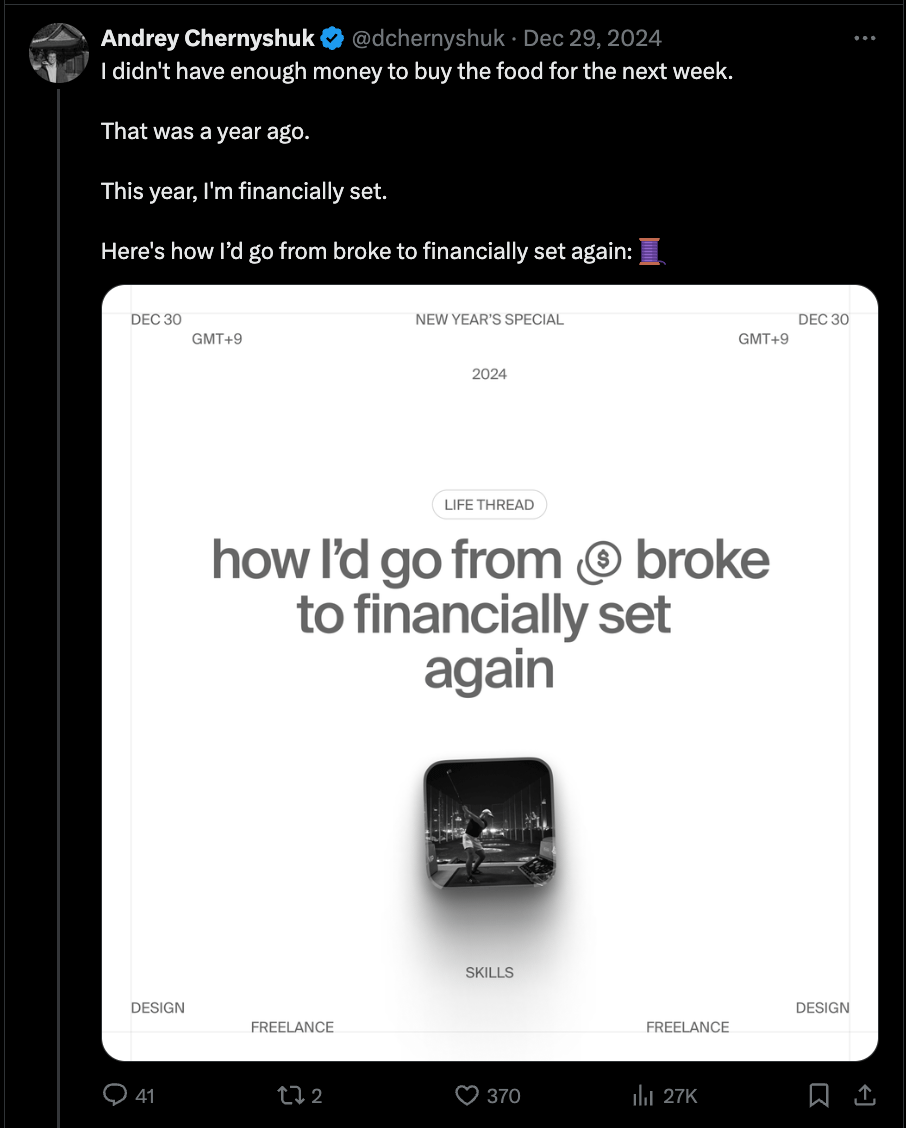
Be cautious with what you put out. The following post might work for a freelance consultant on the rise, but imagine if the CEO of an established agency shared this? It wouldn’t work.
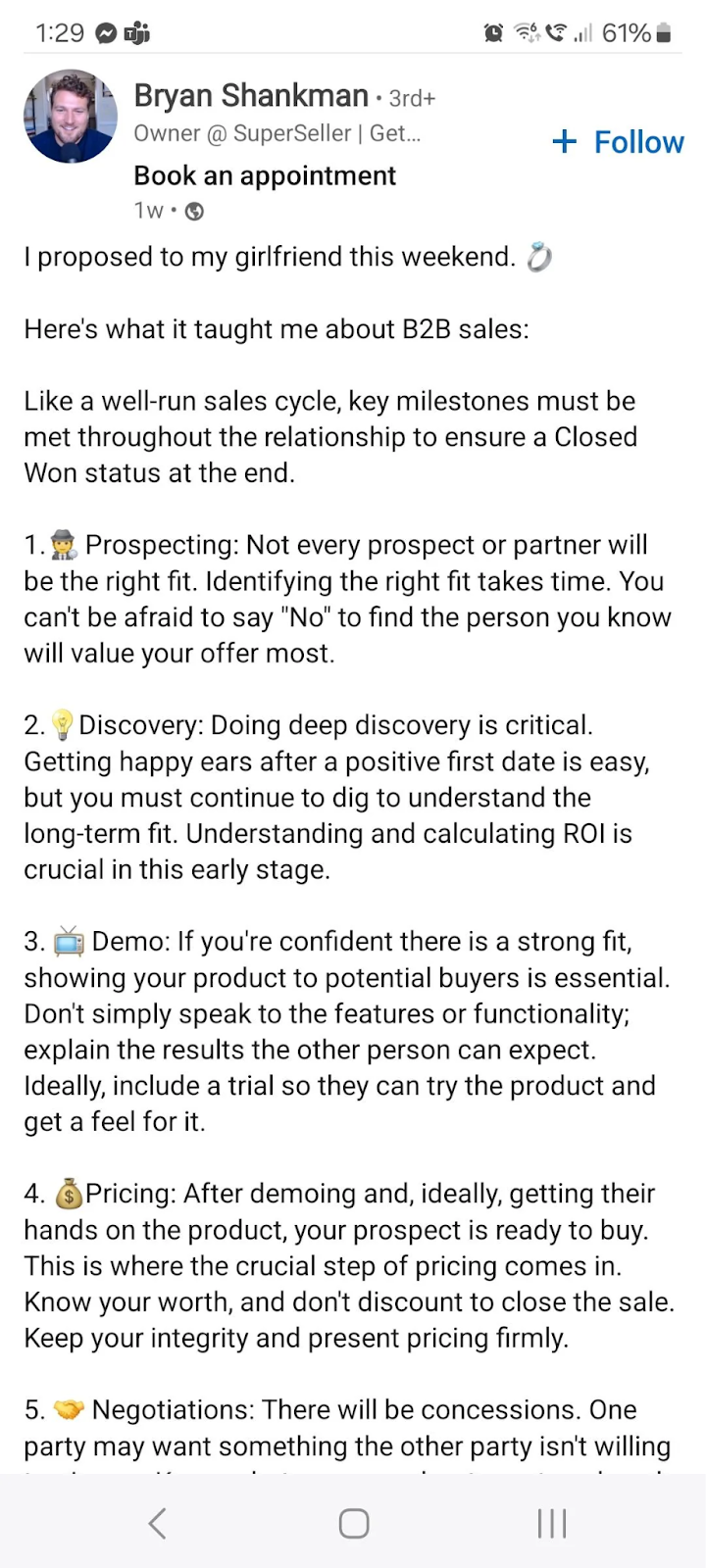
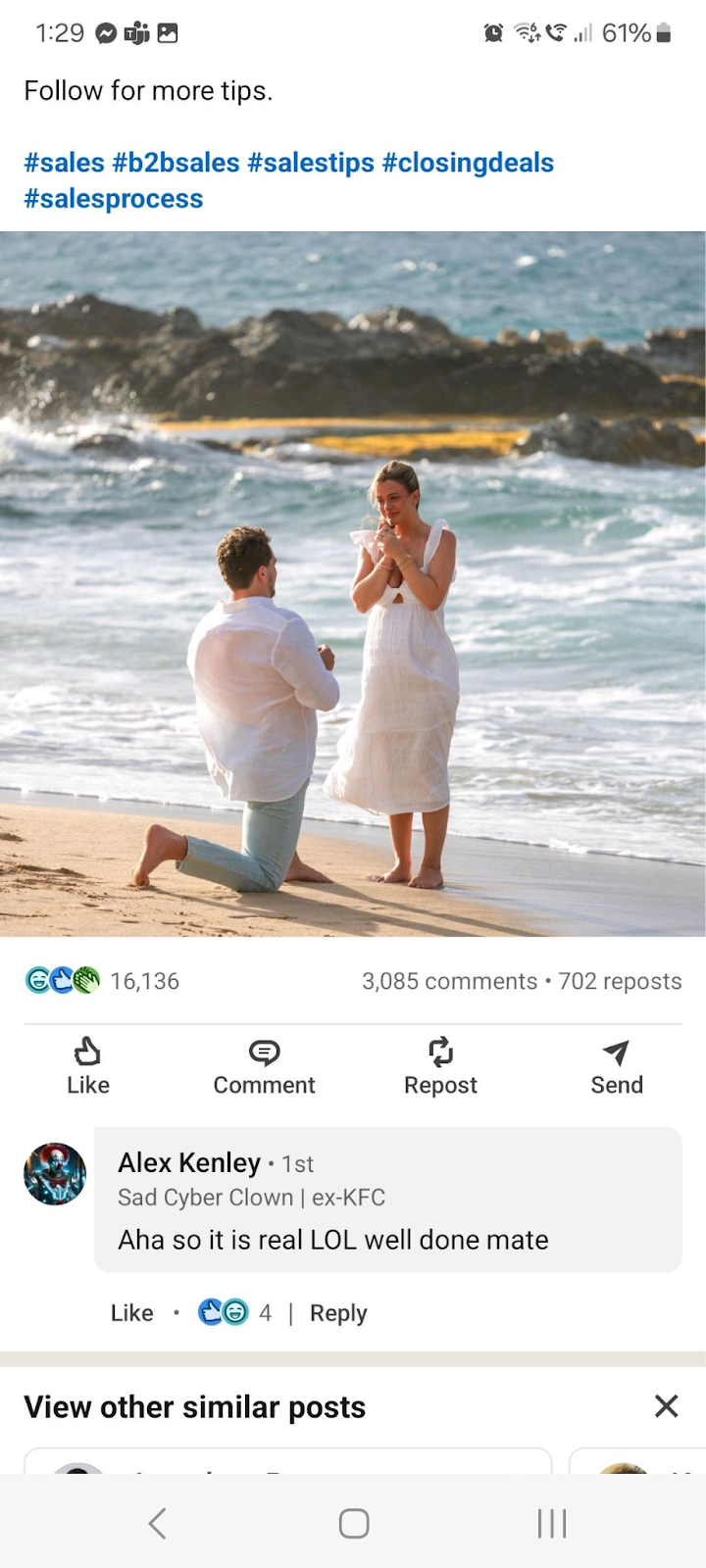
Here’s another bad example. Sure, this post got 16,000+ likes, but not all attention is good attention. Much of this engagement is likely people sharing it ironically.
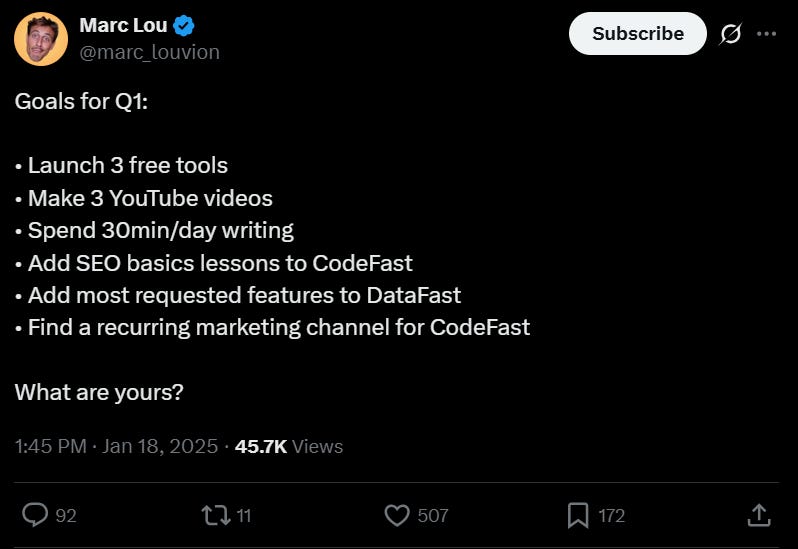
Compare that to this strategic post by Marc Louvion, sharing a pivot with clarity and purpose:
Sam Dunning’s post is a great example of how to share setbacks without tanking your credibility:
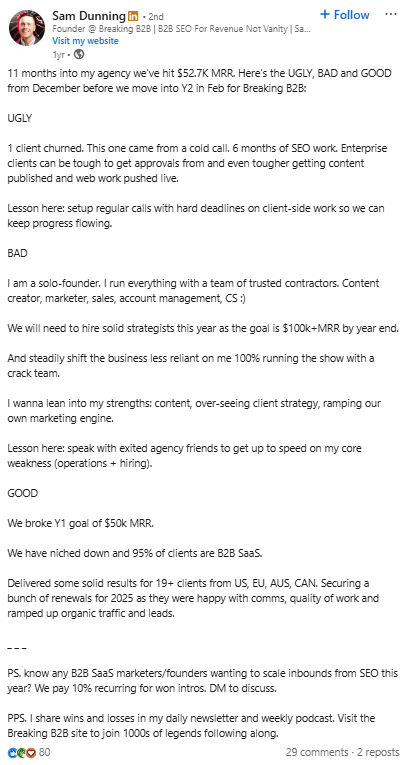
He doesn’t sugarcoat the churn or his solo-founder reality, and immediately extracts the lesson. This format works because it’s honest about struggle while demonstrating competence.
Setbacks + solutions = credibility.
Our Optics Proofer GPT helps you refine posts before sharing.
It checks tone, flags perception risks, and suggests reframes to ensure your message lands professionally while staying authentic.
For example, it might flag “bloated teams” as harsh and suggest “optimising team efficiency” to keep the punch without alienating your followers.
Building in Public: Standing Out in an AI-Dominated World
With so much AI content out there these days, building in public helps you stand out as a real, authentic person.
By sharing your authentic journey, you create human stories that AI simply can’t match. This transparency is what sets you apart, turning followers into loyal supporters and clients.
Why authenticity matters today:
Builds Trust: As people grow wary of polished, AI-crafted posts, your honest voice stands out, earning confidence from clients and partners who value real experiences.
Breaks the Mould: AI content often feels predictable, but your unique challenges and wins are one-of-a-kind, making your posts instantly recognisable and engaging.
Creates Emotional Bonds: Sharing your struggles and successes sparks genuine connections, resonating with audiences in ways AI struggles to achieve.
Delivers Value Through Openness: Being open about lessons learned fosters loyalty, as your willingness to show vulnerability builds stronger, more meaningful relationships.
Sam Dunning proved that building brand recognition on a shoestring budget is possible without any use of AI:
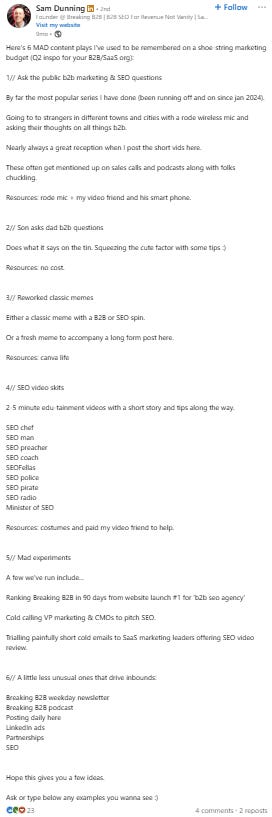
Sam’s audience doesn’t follow him because of perfect copywriting but because his posts are unmistakably his.
When you build in public with real creativity and authenticity, you become the founder people remember, trust, and eventually hire.
Our Optics Proofer GPT in the Skool community extracts your unique insights and frames them in a way that’s unmistakably you, something that’s impossible for generic AI to replicate. Join us today!
Action Plan: Start Building in Public Today
Building in public is your chance to stand out as a B2B founder, connect with your audience, and grow your business through honest, open sharing. By starting today, you’ll build trust, attract clients, and create a community that cheers for your success.
First 30 Days: Your Build in Public Kickoff Plan
Start building in public today with this concrete 30-day plan. It’s designed to kickstart your journey, build momentum, and overcome the fear of sharing.
Let’s make your first month count!
Week 1: Set the Stage with a Public Pledge
Goal: Announce your project and invite your audience to join your build-in-public journey.
Why It Works: A public commitment builds anticipation and holds you accountable. It invites your audience to invest in your journey from day one, creating early buzz that can attract potential clients, partners, or beta testers.
Post Idea:
Template: “I’m launching [project/idea] to solve [problem]. Follow my journey as I build it in public! First step: [specific action]. What do you think?”
Example: “I’m building a SaaS to help B2B startups automate client onboarding. Follow me as I code the MVP! First step: sketching the core workflow. Got any tips for user-friendly onboarding?”
Week 2: Share a Product Development Update
Goal: Show progress, highlight a challenge or early prototype, and invite early feedback via comments, polls, or DMs.
Why It Works: Sharing early work proves you’re taking action. It also invites real-time feedback from potential customers, helping you refine your product to meet market needs while showing you value their input.
Post Idea:
Template: “Day [X]: Working on [specific task] for [project]. Here’s where I’m at: [describe progress/challenge]. Any feedback?”
Example: “Day 10: Struggling with the dashboard UI for our SaaS. Here’s a screenshot of my prototype. Too cluttered? What would make this easier for you to use?”
Week 3: Run a Pricing or Product Experiment
Goal: Test an idea and involve your audience in the decision-making process.
Why It Works: Experiments demonstrate you’re iterating based on real data, which builds credibility with B2B audiences who value evidence-based decisions. Involving your audience in choices like pricing creates buy-in, turning followers into potential early adopters or advocates.
Post Idea:
Template: “Testing [experiment] for [project]. Here’s the plan: [details]. Too [high/low/risky]? Vote below or share your thoughts!”
Example: “Testing a $49/month tier for our client onboarding SaaS. Includes automated workflows and analytics. Too pricey? Too cheap? Vote or let me know what you’d pay for this!”
Week 4: Celebrate a Small Milestone and Thank Supporters
Goal: Share a win to build credibility and show gratitude to your growing community.
Why It Works: Celebrating wins, even small ones, shows progress and reliability, which B2B audiences trust. Thanking supporters fosters loyalty, turning casual followers into a tight-knit community that amplifies your reach and opens doors to new opportunities.
Post Idea:
Template: “Just hit [milestone] with [project]! Here’s how we got here: [key actions]. Big thanks to [supporters/community] for the support! Next up: [next goal].”
Example: “Just got our first 10 beta sign-ups for our SaaS! We reached this by sharing weekly updates on X. Huge thanks to everyone who gave feedback! Next up: polishing the onboarding flow.”
Tips:
Choose Your Platform: Select where you’ll share your story (LinkedIn, X, blog, etc.). Choose what feels right for your audience to make your posts easy to find and engage with.
Set a Posting Schedule: Decide how often you’ll share and stay consistent. A regular schedule keeps your audience hooked and shows clients you’re reliable and committed to progress.
Engage Actively: Reply to every comment or DM within 12 hours to spark conversations. Ask follow-up questions (e.g., “What feature would you add?”) to build trust and community.
Document As You Go: Keep notes, take screenshots, and record metrics. These details help you share honest, meaningful updates that show your audience how you’re moving forward.
The Payoff: Why It’s Worth It
As you can see, building in public isn’t just a powerful strategy—it’s a mindset.
I’ve yet to see a founder commit to it and fail. Some see traction in 30 days, while others take a few months.
The key is consistency and courage. The compounding effects of consistency will grow your audience, establish your authority, and create opportunities you can’t even imagine yet!
B2B founders, let My Content Pal build your personal brand on LinkedIn and X while you focus on your business. Book a call with us today!
Stop hiding and start building in public now.
Thanks for reading Post & Profit! Subscribe for free to receive new posts and support my work.