

The other week, I said B2B content doesn’t have to be boring.
A lot of you replied with “okay but HOW do I be funny without becoming the numpty who gets destroyed in some Gen Z’s Slack channel?”
Or worse…. NO ENGAGEMENT. Not even hate.
FAIR. Nobody wants that.
And that’s why I did something really weird.
I went through every type of B2B meme I’ve posted, seen my clients post or watched die a painful public death on LinkedIn… and I ranked them all.
On a scale of :
“this meme got me a sales call” to “I lost 3 followers, got a hate comment, and my boss forced me to delete the post”.
(and yes I’m including my best and worst memes too lol)
One stat before we start, because it’s too good to skip: Kantar tested thousands of ads and found that only 33% even attempt humor. But 50% of their Creative Effectiveness Award winners use it. Read that again.
Half the winners are funny. Two-thirds of brands are too scared to try.
Are you going to be part of the winners or the losers?
… thought so. Let’s begin.
🏆 S TIER: “I feel personally attacked”
The meme so specific to your ICP’s daily suffering that they screenshot it, send it to a colleague, and go “this is literally us.”
Nobody else gets the joke. That’s the whole point.
When a founder sees a meme about waiting 51 days for a procurement approval and their eye twitches… that’s S tier.
When a sales leader sees a meme about the CRM nobody actually updates and tags their entire team… S tier.
When someone DMs it to their business partner with zero context because they both just know… S tier.
This is the dark funnel at work. You’ll never track that DM in your analytics. But you’ll feel it in your pipeline.
Why it hits: Evolutionary biologist Richard Dawkins coined "meme" in 1976. His point: ideas spread through culture the same way genes spread through biology. The strongest survive. S-tier memes survive because they're so specific they feel like insider knowledge. Sharing one makes the sender look smart, in-the-know, and part of the tribe. That's what Berger calls "social currency": the most powerful sharing trigger there is.
The test: If someone outside your industry sees it and says "I don't get it": congratulations. You nailed it.
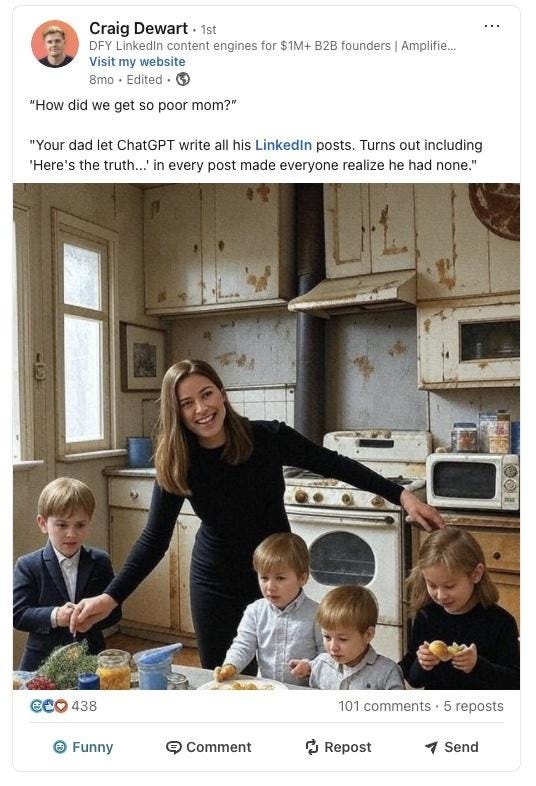
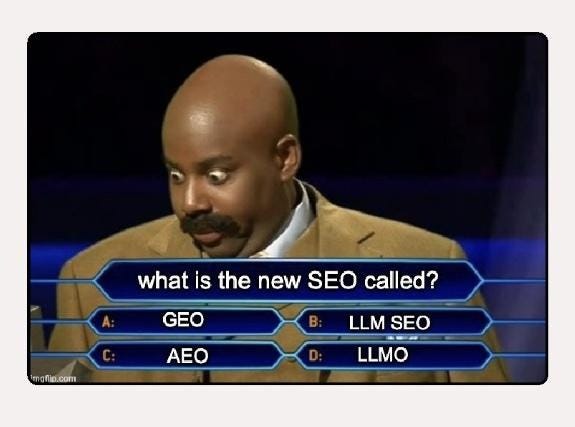
A TIER: “Tag someone who does this”
Workplace humour. Marketing vs. sales. The meeting that should have been an email. Your boss’s boss’s boss asking for “a quick update” at 4:57 PM on a Friday.
This is where Gong lives. Where Kinso’s “POV: Marketing team meets Software Engineers” gets millions of views. Where Hootsuite and Asana and every B2B brand with a personality posts the stuff that makes LinkedIn feel briefly human.
A tier is your reach engine. It won’t close a deal directly. But it puts your brand in front of 10x the audience. Every view builds a tiny layer of familiarity and trust.
Research on brand humanisation found that just sounding casual and human (versus corporate) increases both engagement and purchase intent. A-tier memes do that at scale, whether you realise it or not.
The test: A colleague in a completely different industry sends it to you. “Lol this is so true.” Broad, but earned.
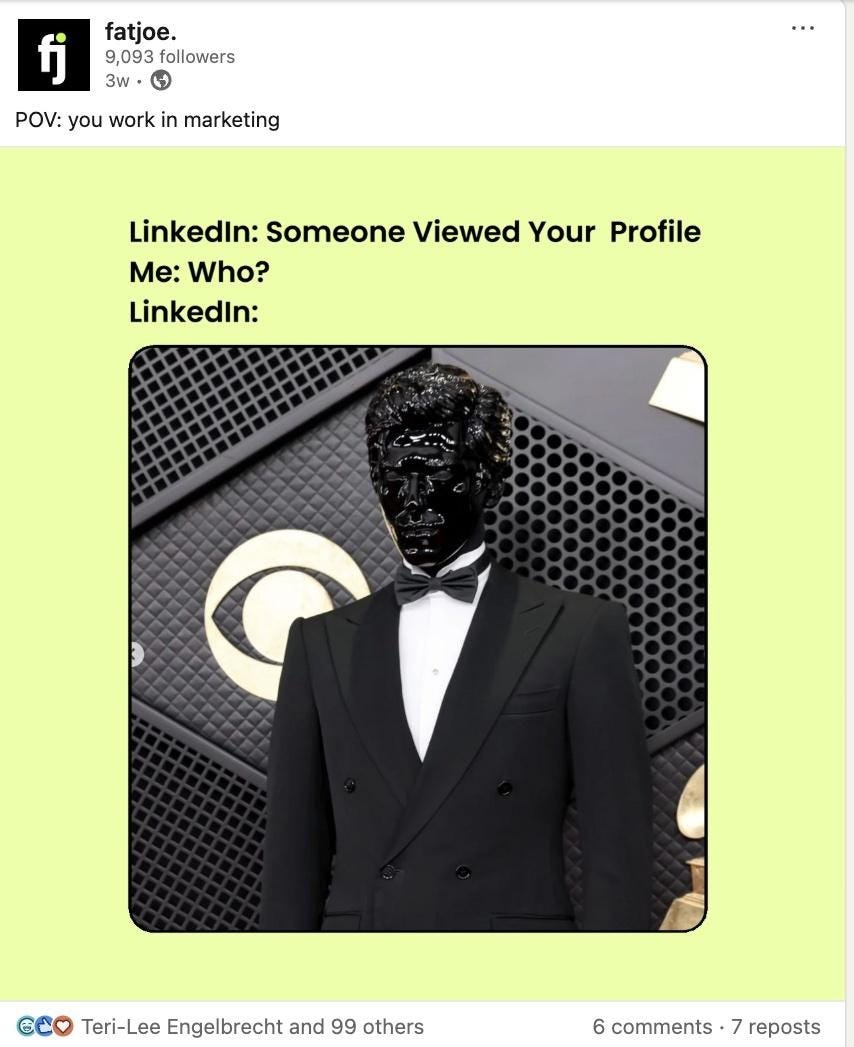
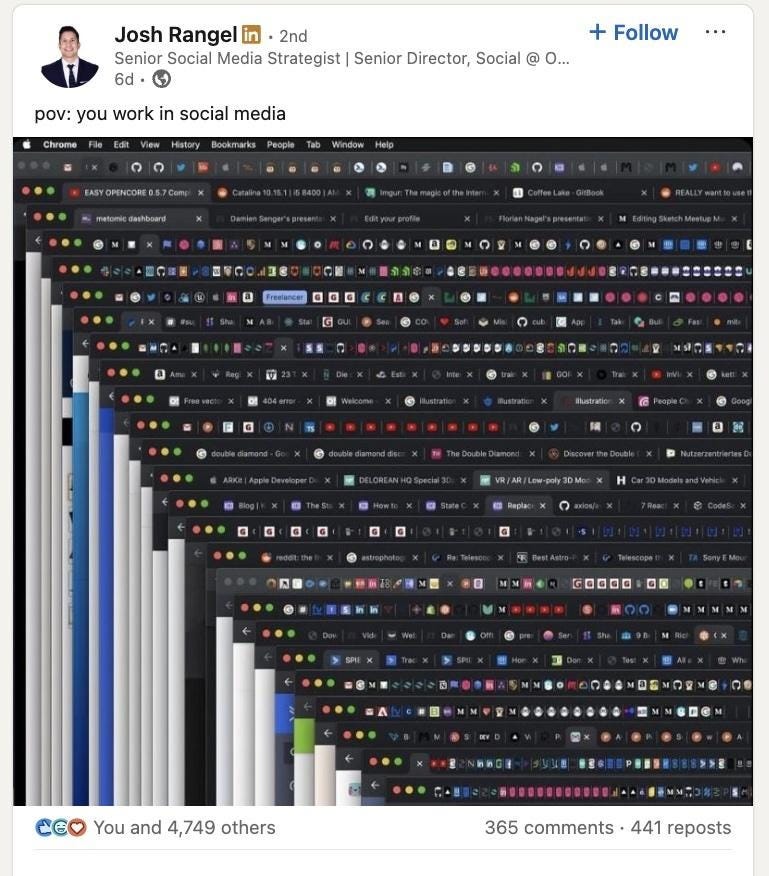
B TIER: “Okay that’s pretty good”
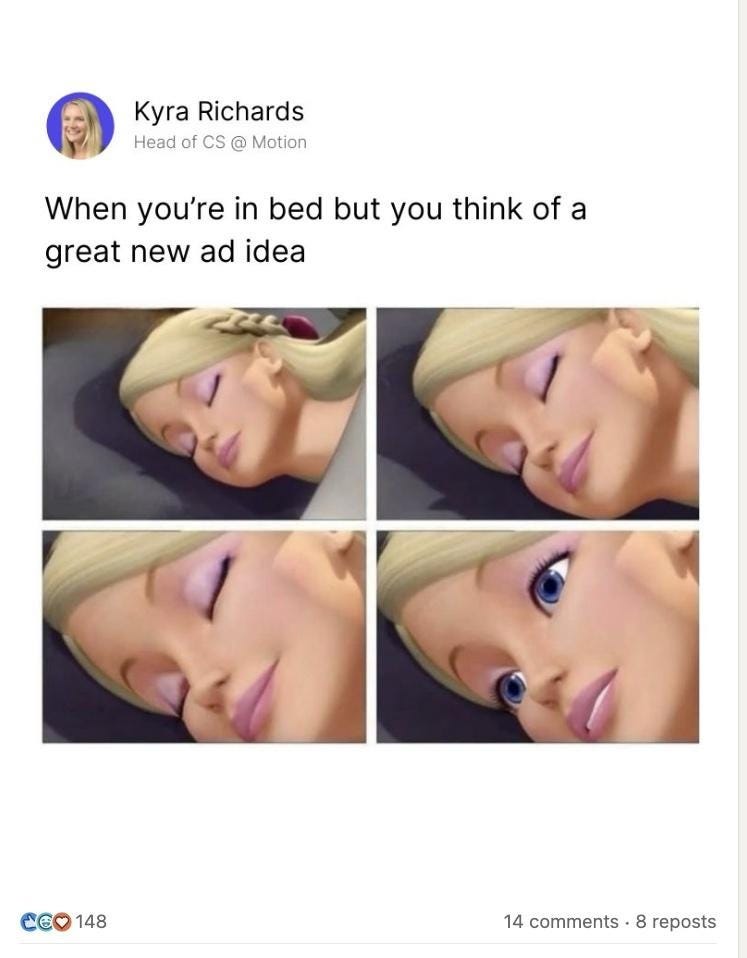
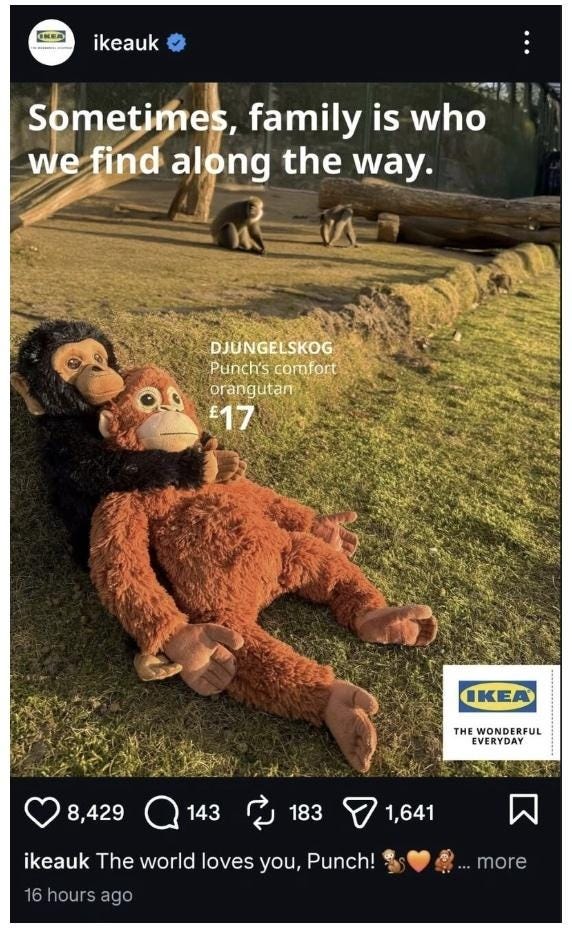
You take a trending meme format (Coldplay kiss cam, ChatGPT caricature, Punch the Monkey, by the time you read this it’ll be something new..) and remix it with your industry’s angle.
The format does half the work because people already know how to read it. Zero cognitive load. Fast laugh. Quick share.
But here’s why B tier isn’t higher: timing is everything and most of you are too slow.
By the time your meme has been through your approval chain, your manager’s “hmm can we soften this,” and your designer’s “I’ll get to it Thursday”, the format is already in hospice care. A trending template posted three weeks late signals the opposite of cultural awareness.
As the Content Marketing Institute put it: the point of memes these days isn’t to go viral. It’s to go relevant.
The test: If you have to explain the template to anyone on your team, you’re already late. Close the doc. Move on. Wait for the next one.
C TIER: “...Sure”
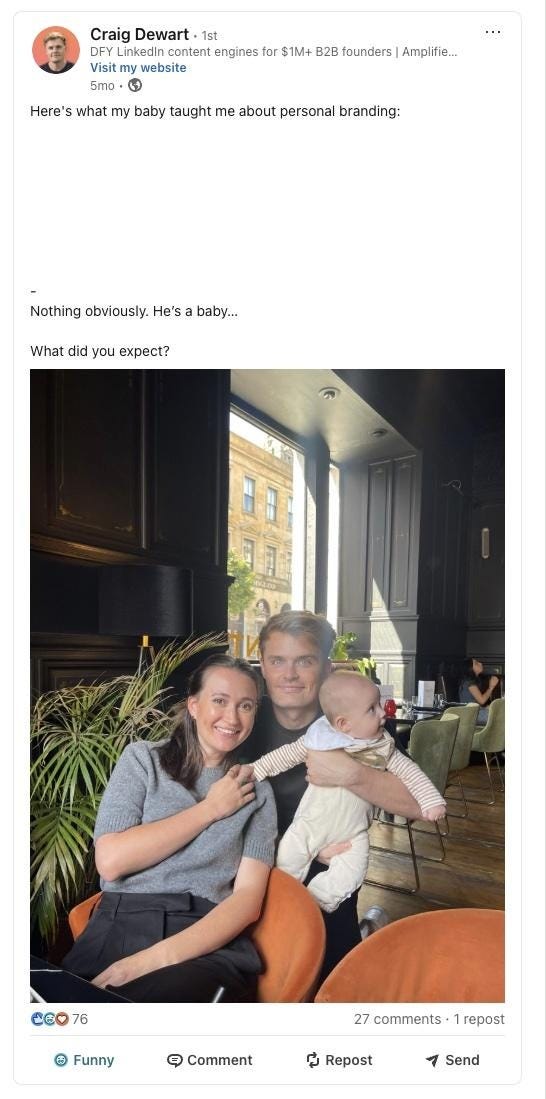
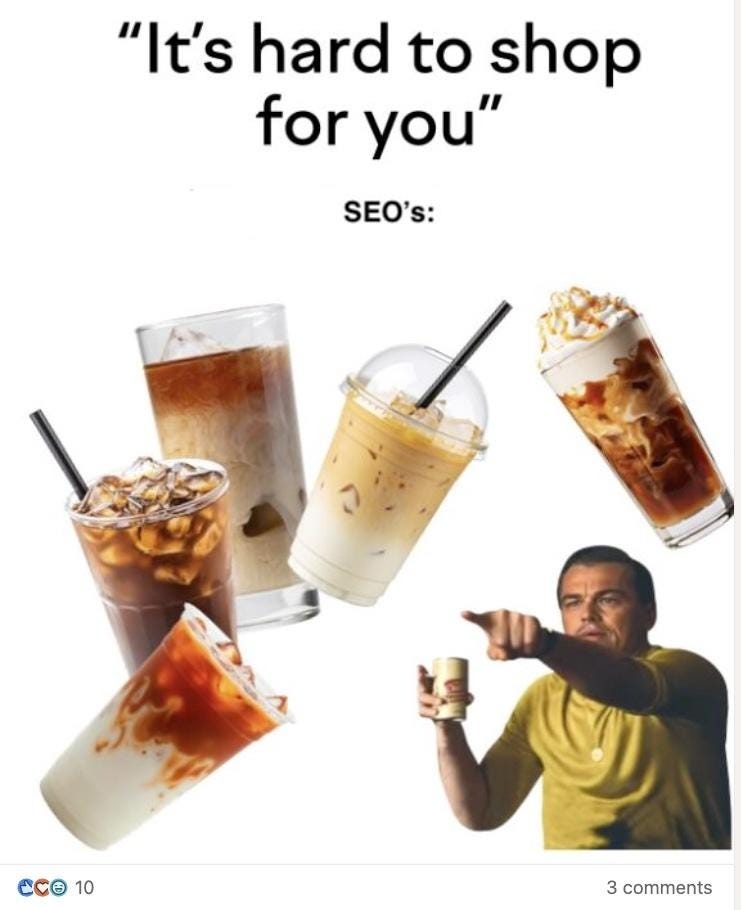
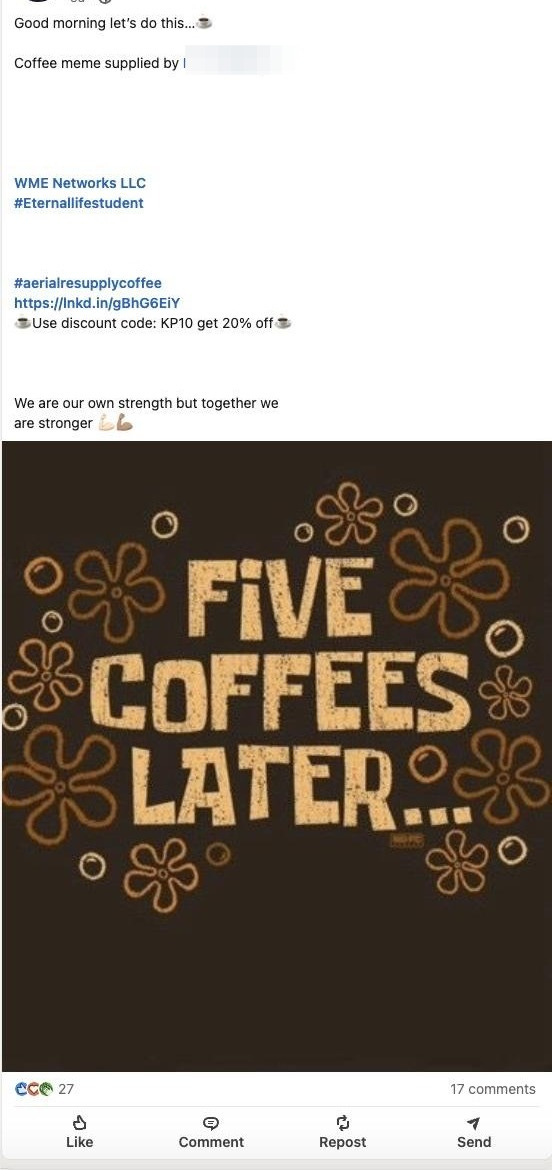
The “Raise your hand if you love coffee ☕” of B2B memes.
It’s not wrong. It’s not offensive. It’s just... beige. A mildly relatable observation about Monday mornings or inbox zero, paired with a stock meme image that could be posted by a SaaS company, a coffee brand, or a dentist’s office without changing a single word.
You’ll get a few polite likes. A “so true 😂” from someone who comments on everything. But nobody is screenshotting this. Nobody is DMing it. Nobody is thinking about your brand 30 seconds later.
Why it flatlines: Remember Berger’s research: contentment is a low-arousal emotion that suppresses sharing. C-tier memes make people feel mildly amused. Mildly amused people don’t take action. They sit still. They scroll. Your meme enters their brain and exits through the same door without touching a single wall.
The test: Could a coffee brand post this? Could a fitness account? Could literally anyone? Then it’s C tier. You haven’t earned specificity yet.
D TIER: “Who approved this”
You know the one.
Someone on the team read an article about meme marketing and decided “we should do memes.” So they took a product feature, put it on a meme template, added the company logo in the corner, and bolted a CTA on the bottom.
“When you finally find a CRM that syncs with your calendar 😏 [Learn more: link]”
No.
This is the B2B equivalent of your dad dabbing at a wedding. The intention is good. The execution makes everyone in the room look at their shoes.
People can smell forced humour from three scrolls away. Not only does it fail to land, it also erodes trust. One creative director said it best: “It’s not about turning your LinkedIn into a meme page. It’s about using humor strategically to humanize your brand.” The second it feels like a tactic, it’s dead.
The test: Remove the logo. Would anyone know (or care) that a brand made this? Would anyone share it? If the answer is no to both, D tier. Start over.
❌ F TIER: “Delete this before the client sees it”
The hall of shame. The meme crimes. The things that get screenshotted for the wrong reason and passed around group chats with the caption “look what [brand] just posted lmaooo.”
You’re in F tier if you:
→ Slapped your logo on a trending template three weeks after it peaked and thought nobody would notice (they noticed)
→ Joked about layoffs, data breaches, or a recession during an actual layoff / breach / recession
→ Used a meme format from a subreddit that none of your audience has ever visited
→ Overexplained the joke. With a disclaimer. In parentheses. (”This is not financial advice. Please consult your CFO. Terms and conditions apply.”)
→ Punched down at a specific role or team instead of punching at a shared frustration
→ Posted something edgy at 11 PM, woke up at 7 AM, and felt your stomach drop
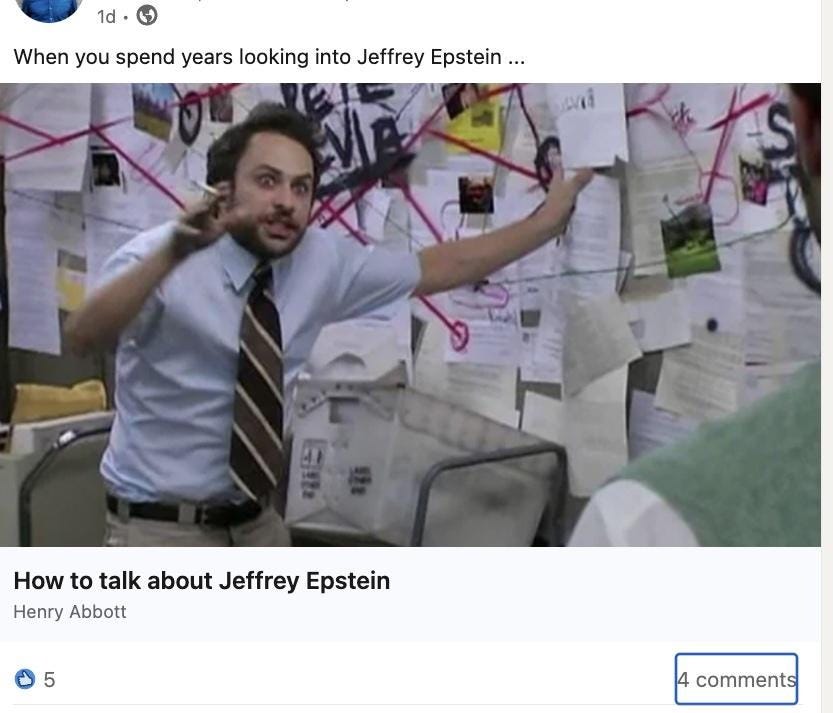
A fintech company once posted “When your API crashes faster than the stock market” during a recession. The engagement was not the kind they wanted.
The rule: If anyone on your team says “this might be too much”... they’re right. The 24-hour rule exists: make the meme, sleep on it, look at it with fresh eyes. If it still feels funny and safe? Post it. If there’s a flicker of doubt? Kill it.
HOW TO MOVE UP
Okay. You’ve located yourself on the tier list. (Be honest. I know most of you are somewhere between C and D. That’s where everyone starts. That’s where I started.)
Here’s the cheat code for climbing:
C → B: Get faster. Stop running memes through a three-person approval chain and a legal review. Build a “meme safe zone” - pre-approved topics, tones, and boundaries your team can riff within without calling a meeting. The best memes are reactive. If it takes you a week, the moment is gone.
B → A: Get more specific. Stop making memes for “professionals.” Start making memes for your professionals. What’s the inside joke in your industry? The whispered frustration? The thing everyone thinks but nobody posts about? That’s your material.
A → S: Get braver. S tier feels risky. The meme is specific enough to alienate anyone who isn’t your audience. It calls out a real pain point by name. Most brands never reach S tier because S tier requires you to stop trying to please everyone. And most marketing teams are hardwired to do the opposite.
THE TIMING CHEAT SHEET
A meme’s tier isn’t fixed. Timing can move a B to an A.. or an A to an F.
Trending formats: You have 24-48 hours. Max. If your approval process takes longer than that, build a faster one or don’t play in this category.
Niche pain-point humor (S tier): Timeless. The procurement process will still be broken next quarter. The CRM will still be a mess in six months. Post these whenever. They don’t expire because the pain doesn’t expire.
The hidden variable: When your audience scrolls matters. Study your analytics. Tuesday 8:47 AM when the VP of Marketing is avoiding her inbox? Gold. Friday 5 PM when she’s already mentally on weekend? Graveyard.
THE 5-SECOND TASTE TEST
Before you hit post, run through these. Fast.
Would my ICP screenshot this and send it to someone? No? It’s C tier or below. Back to the drawing board.
Am I making fun of a shared frustration or a specific person? Punch at the situation. Never down.
Is this still funny without my logo on it? If yes: good, it’s genuinely funny. Now make sure the brand is still somewhere in the picture.
4. Is the format still breathing? If you have to explain the template, it’s already in the ground.
5. Would I be embarrassed if a prospect brought this up on a sales call? If yes, pause. If “slightly nervous but weirdly proud”.. that’s the sweet spot. That’s where all the good stuff lives.
YOUR MOVE
Next time you’re about to post something safe, polished and forgettable... stop. Ask yourself where it lands on the tier list.
Then ask: what would the S-tier version of this look like?
That’s the post worth making.
- Craig